






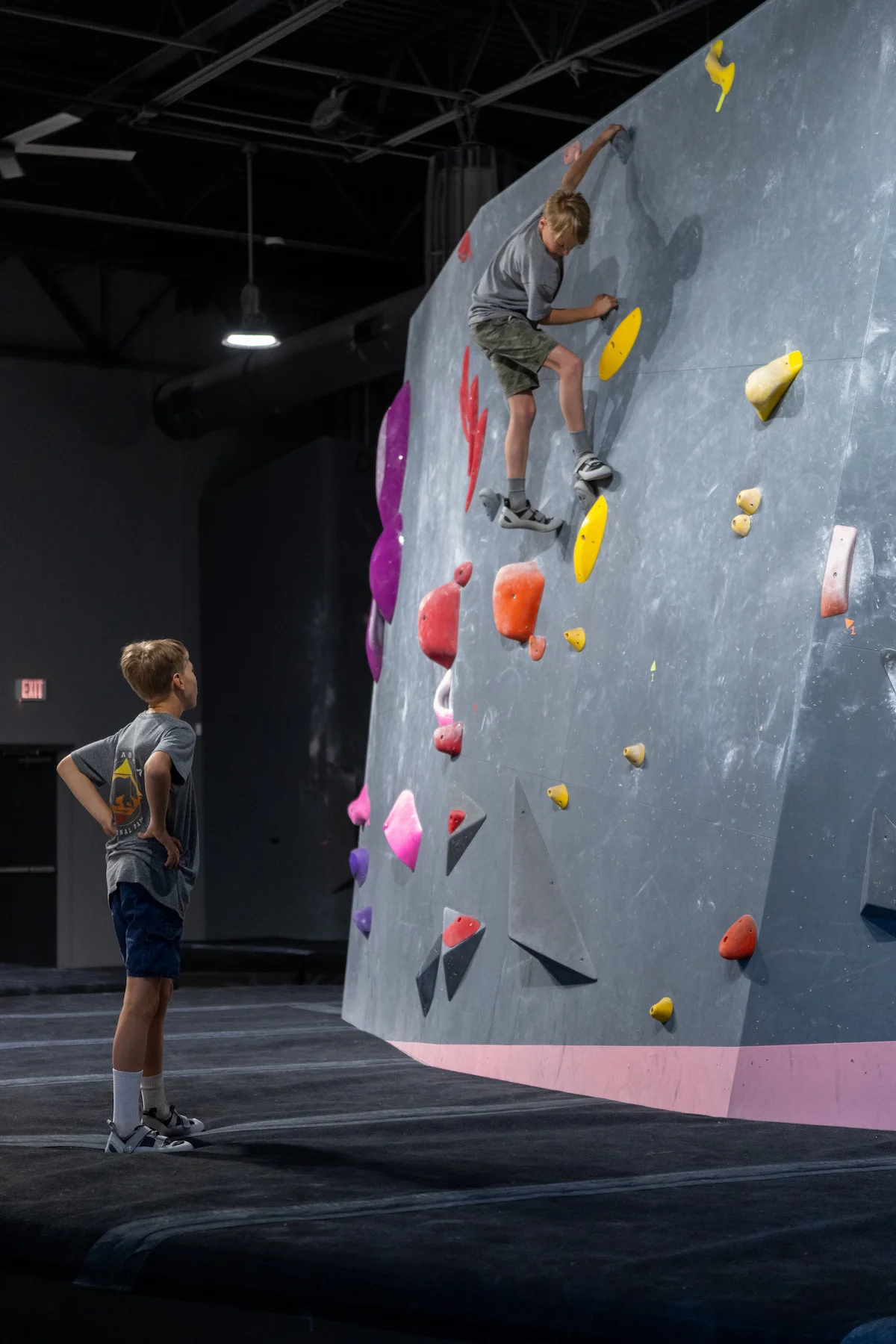
If you call us with one question before a first visit, there's a decent chance it's this one: "Do you have auto-belays?" It's a great question, and it deserves a straight answer instead of a sales pitch. The short version: no - Shift is a bouldering gym on purpose, and we think that's the better call for most kids and most new climbers. The long version is this post, including the parts where an auto-belay gym genuinely is the right choice.
What an auto-belay actually is
An auto-belay is a mechanical device mounted at the top of a rope climbing wall. You clip your harness to its line, climb, and when you let go - on purpose or otherwise - the device takes up the slack and lowers you gently to the floor. No partner holding the other end of the rope, no belay class required.
Credit where it's due: auto-belays do some things well. They let you climb a tall wall without learning to belay or bringing a partner. They give kids the big-wall height experience, which is a genuine thrill. And they let one staff member watch a lot of climbers at once, which is why they're popular for birthday parties and large groups. In Holland, Scrapyard runs auto-belays, and most of the rope gyms around Grand Rapids have them too.
What a bouldering-only gym is
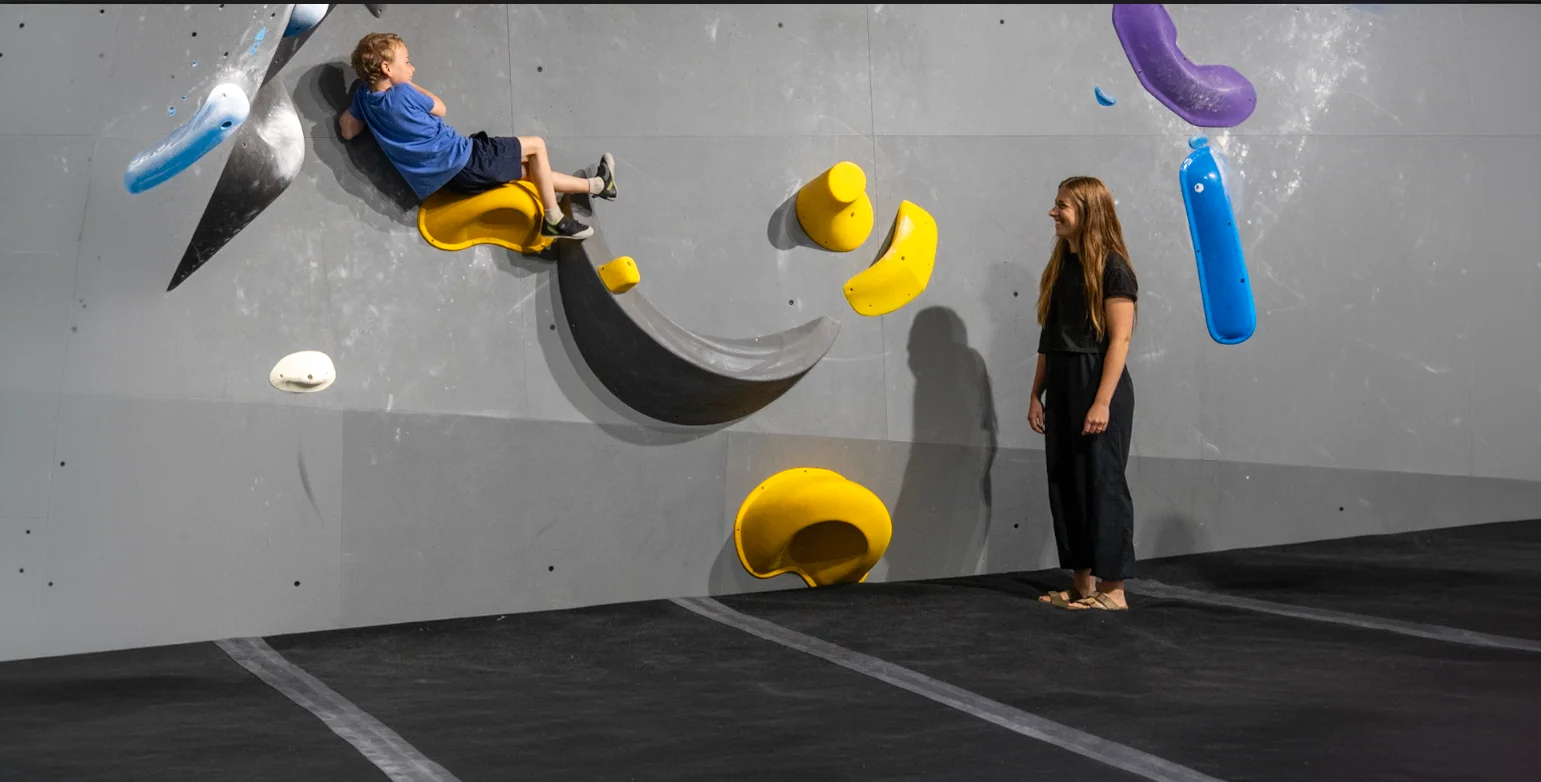
Bouldering is climbing's stripped-down form: shorter walls, no ropes, no harnesses, no devices. Just you, the holds, and thick padding below. Climbs are called "boulder problems" because each one is a physical puzzle a few moves long, and at Shift they're organized into color-coded circuits, so you always know exactly which climbs are set at your level.
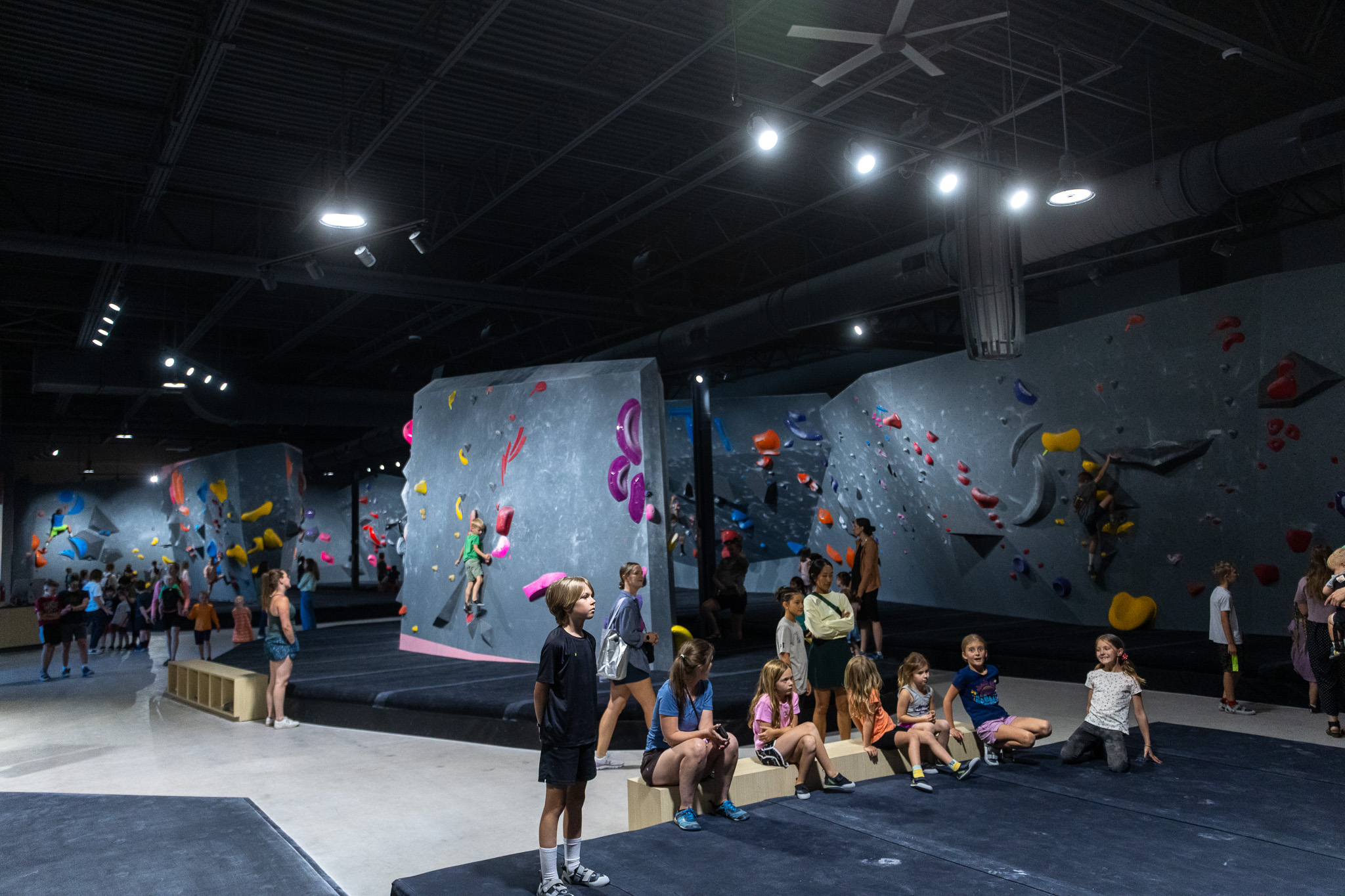
Our walls top out at 16 to 17 feet over 12 to 14 inches of engineered foam flooring - more than 4,300 square feet of it, continuous under every climbing surface. When you finish a climb, you climb back down on the holds or drop to the padding. That's not a workaround for missing ropes; it's the design of the entire sport.
Auto-belay vs. bouldering at a glance
The wall: auto-belays run on taller rope walls; bouldering walls are shorter - ours are 16 to 17 feet - with the difficulty packed into the moves instead of the height.
The gear: an auto-belay needs a harness and a correct clip-in before every single climb; bouldering needs shoes and chalk, both free with entry here.
The catch: a device lowers you on a line; in bouldering the landing is the floor itself - engineered padding you learn to use on day one.
The partner: neither requires one! That's the honest tie: auto-belays and bouldering are both genuinely solo-friendly ways to climb.
The session: auto-belay laps are longer and fewer; bouldering is short puzzles at high volume - more attempts, more variety, more coaching moments per hour.
Best for: auto-belays for the tall-wall experience without a belay class; bouldering for learning movement fast, climbing socially on the mats, and kids who thrive on frequent, countable wins.
Why we chose bouldering-only
Falling is a skill, not an emergency. On a rope wall, the equipment exists so falls don't matter. In bouldering, falling is something we teach - how to land, how to roll, how to trust the padding - starting on your very first visit. Kids pick this up remarkably fast, and it builds real body awareness that no device can hand you. Climbers who learn to fall well climb more confidently everywhere, on any wall, for the rest of their lives.
The checklist stays short. Shoes, chalk, go. There's no harness to fit, no device to clip, no line to manage between climbs. The safety system is the floor, and the floor is always on.
More climbing per hour. No tying in, no clipping, no waiting to be lowered - a bouldering session is attempt after attempt after attempt. That volume is exactly how new climbers learn movement, and it's why people who start on boulders tend to progress quickly. And because our crew strips and resets sections weekly, the puzzles are new essentially every time you visit - volume never turns into repetition.
Success you can count. At any given time we keep 8 to 10 climbs in each of our four most accessible circuit colors - 30 or more climbs a first-time climber can genuinely succeed on, on day one, spread across the whole gym including the steep wall. For a kid or a brand-new adult, that's the number that decides whether the first visit feels like a win.
The mats are the town square. Bouldering happens at ground level, together. Spotting, cheering, trading beta (climber-speak for how you solve a climb) - it all happens face to face on the padding, which is why bouldering gyms feel social in a way rope walls physically can't. For kids, that means friends and encouragement at arm's reach. For adults, it's how so many people find their people here.
What kids actually need, per the research
We wrote a full research-backed checklist on what makes a climbing gym good for kids, and the short version applies directly here. The research on youth sports is blunt: enjoyment predicts whether kids keep participating more than anything else measured, and feeling competent matters too. In a climbing gym, that translates to one practical question - how many climbs can my kid actually succeed on today? A tall wall is a thrill. A floor full of achievable, interesting problems is a habit.
The rest of the checklist is safety you can verify rather than vibes: measured padding (ours is that 12-to-14-inch engineered system), walls built to a real standard (ours were engineered to EN 12572-2:2017, the international bouldering wall standard, with independent structural review), a stated supervision rule (climbers under 14 are actively and directly supervised by a guardian or chaperone at Shift, always), and coaching that respects young bodies - our youth programming keeps kids off intensive small-hold training entirely, because young hands belong on big holds and varied movement.
Is bouldering safe for kids?
This is usually the real question underneath the auto-belay question, so let's answer it directly. Bouldering, like all climbing, has inherent risk - and the honest measure of a gym is whether its safety systems are stated, specific, and visible. Ours are: 16-to-17-foot walls, a foot-plus of continuous engineered padding with extended fall zones, falling technique taught before climbing technique, and the under-14 supervision rule enforced every day. Come stand on our mats and you'll feel most of that through your shoes in the first ten seconds!
Questions parents ask us about this
Can I climb with my kid?
Please do - it's the best version of a visit. Climbers under 14 need a guardian or chaperone actively with them on the floor anyway, and parents who climb alongside their kids turn supervision into a shared hobby. Plenty of our member families circuit together on the same colors, and if you're coming often, our family membership options make that easy.
What age can kids start?
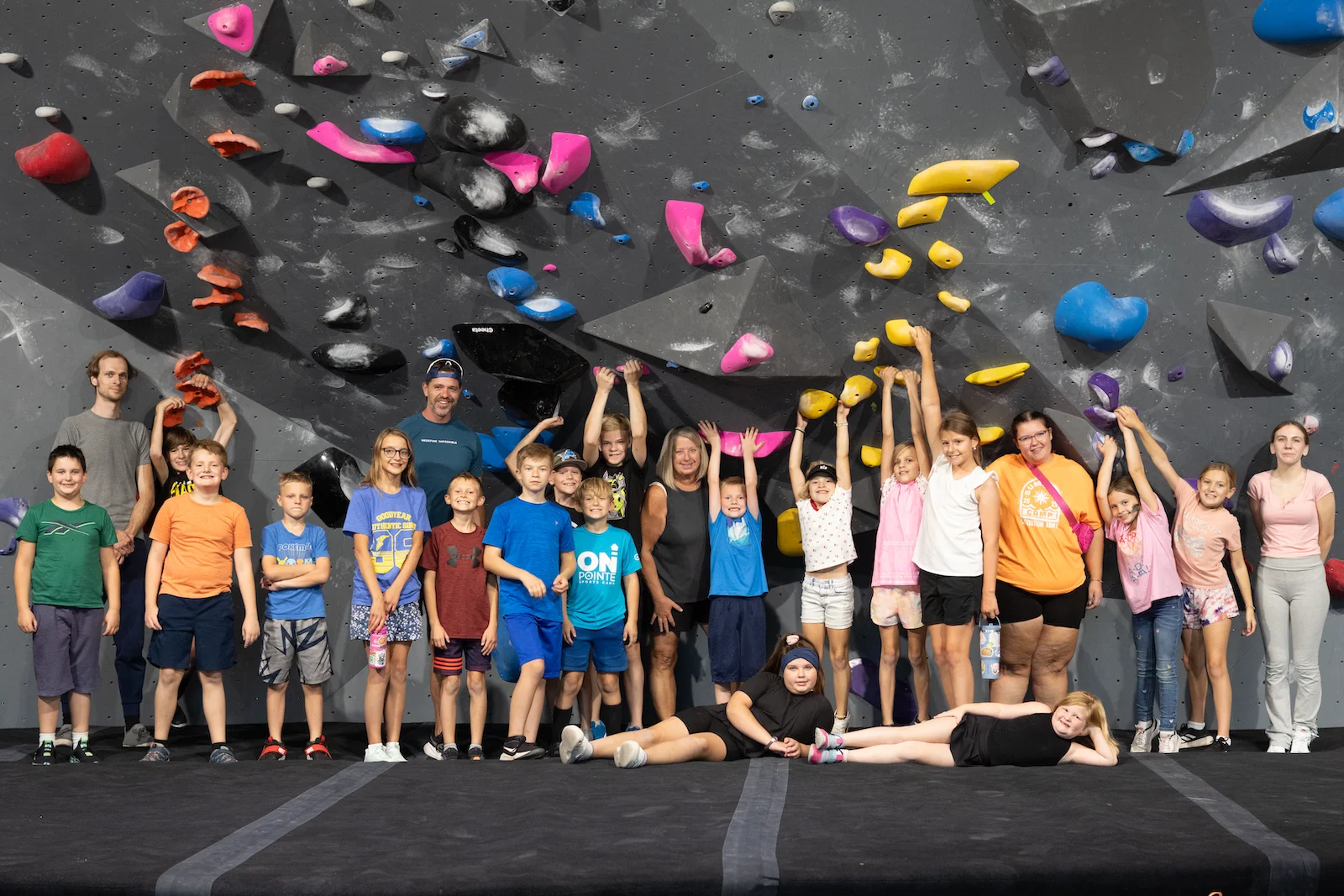
There's no magic number - it's less about age and more about a kid who wants to climb and an adult ready to stay engaged on the floor. Younger kids do great on our most accessible circuit colors with a parent close by, and our youth programs - afterschool sessions, homeschool PE, and camps - group kids by age so the coaching always fits.
What about groups?
Bring them! For visits of six or more - youth groups, scout troops, teams - reach out ahead of time and we'll help you set it up so everyone climbs from minute one.
When an auto-belay gym is the right call
We'd rather point you well than point you here. If what your climber wants most is the tall-wall experience - the long climb, the view from the top, the slow ride down - an auto-belay gym delivers exactly that with no belay class needed, and that's a fine reason to visit one. If you're weighing bouldering against rope climbing more broadly, we wrote an honest primer on the differences. And if you're curious why wall height matters so much once real ropes are involved, the physics are worth five minutes.
Come feel the difference
The best answer to the auto-belay question is twenty minutes on our mats. Shoe and chalk rentals are free with every entry, the first circuit colors are waiting on every wall in the building, and someone on the floor will teach you - or your kid - to fall like a pro before the first climb. Plan a first visit and we'll take it from there!
