





Search this question and you'll find two confident, opposite answers. One camp says beginners belong on vertical walls and slabs until their technique is "ready." The other says steep climbing builds core strength and real movement skills from day one. They can't both be right - and actually, neither is.
The real answer: the angle of the wall matters less than whether there's anything on it you can climb. Let us explain, since we built our gym around this.
The case against steep walls is really a case against bad setting
The "slab first" argument goes: on steep terrain, new climbers over-grip, pump out (climber-speak for your forearms filling with fatigue until your hands quit), and learn to hang instead of move. And that's true - when the only climbs on the steep wall are hard. A beginner on an overhang with tiny holds isn't learning, they're surviving.
But notice the assumption: that steep walls only have hard climbs. At most gyms, that's the reality - a narrow overhang fits six or seven climbs, so gyms set them for their strongest climbers. The beginner experience on that wall is genuinely bad. It's just not the wall's fault.
What steep terrain teaches when you can climb it
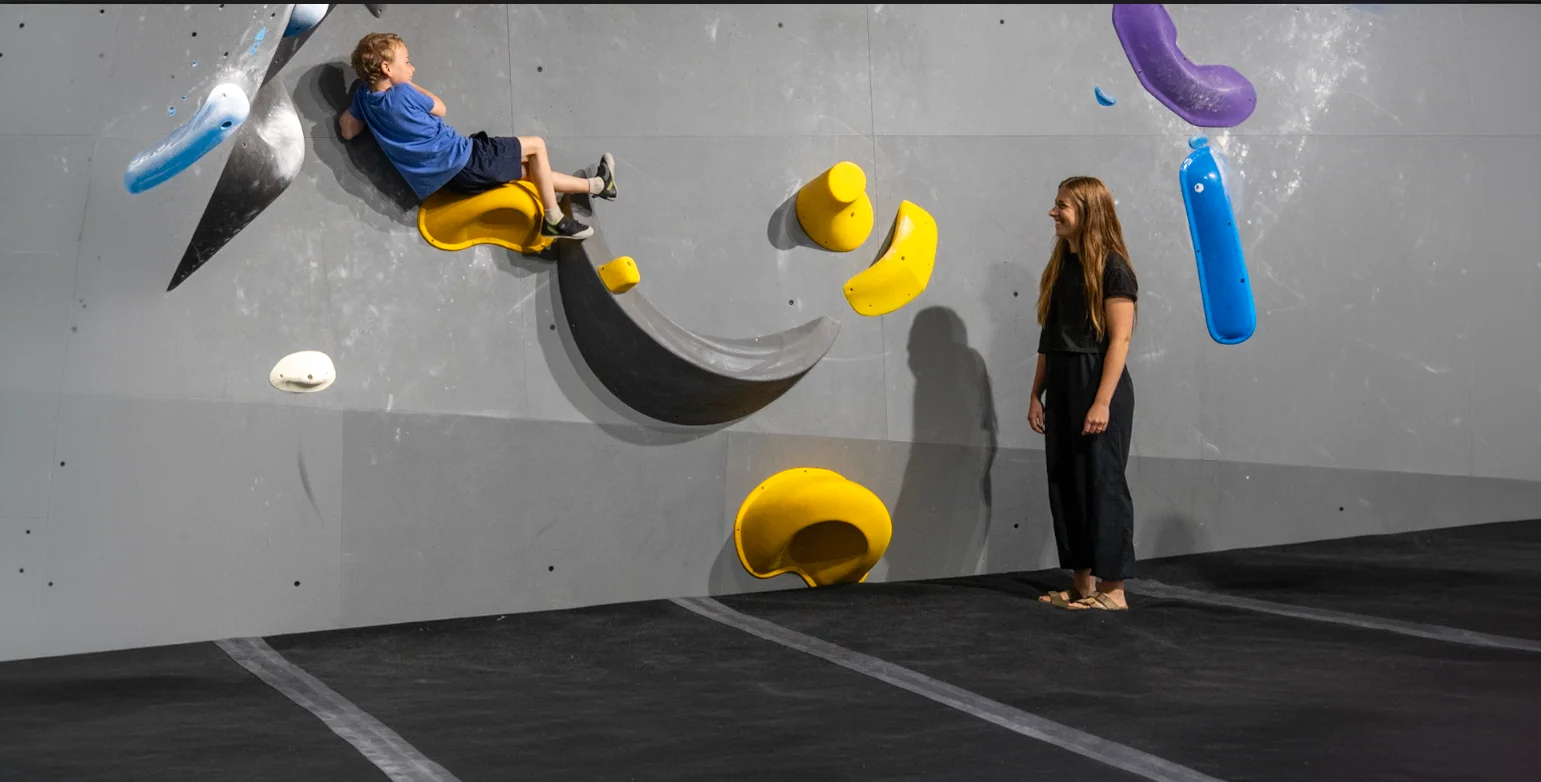
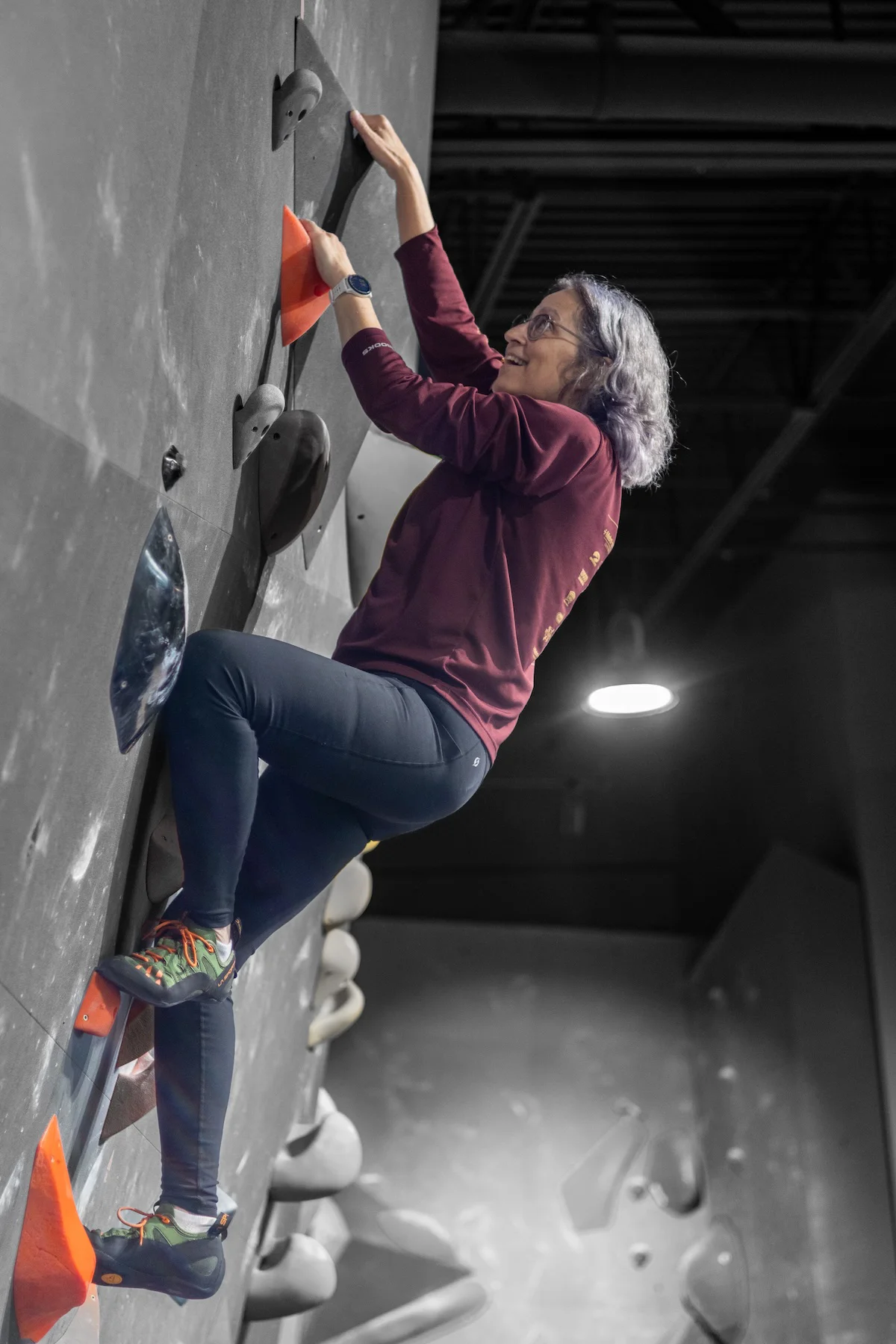
Put big, friendly holds on an overhang and something great happens. The leaning wall forces the habits coaches spend years trying to teach:
- Your feet start mattering immediately. On vertical walls, sloppy feet go unpunished. On steep ground, if your feet cut loose you feel it - so you learn to place them, and keep tension through your whole body, from your very first sessions. Movement coaches build entire frameworks around exactly this (Power Company Climbing's, for instance).
- You learn to hang on straight arms and use your skeleton, because your muscles simply won't carry you the inefficient way for long.
- Falling is friendlier than it looks. On an overhang you fall away from the wall onto open padding. A 2025 study of 301 bouldering injuries found the classic injury is a feet-first landing from a vertical wall; roof and steep-wall falls made up a small fraction of incidents. (No wall angle makes falling risk-free - that's what 12-14 inches of engineered flooring and good landing habits are for.)
So the honest checklist isn't "steep or not" - it's this
If you're choosing a gym as a new climber, don't ask whether they have an overhang. Ask:
- Are there beginner climbs on the steep wall? Not one token easy climb - several, refreshed regularly.
- How many climbs can I do on day one, anywhere in the gym? If the answer isn't "plenty," the angle debate is irrelevant.
- Is the padding real? Thick, continuous, engineered flooring under everything.
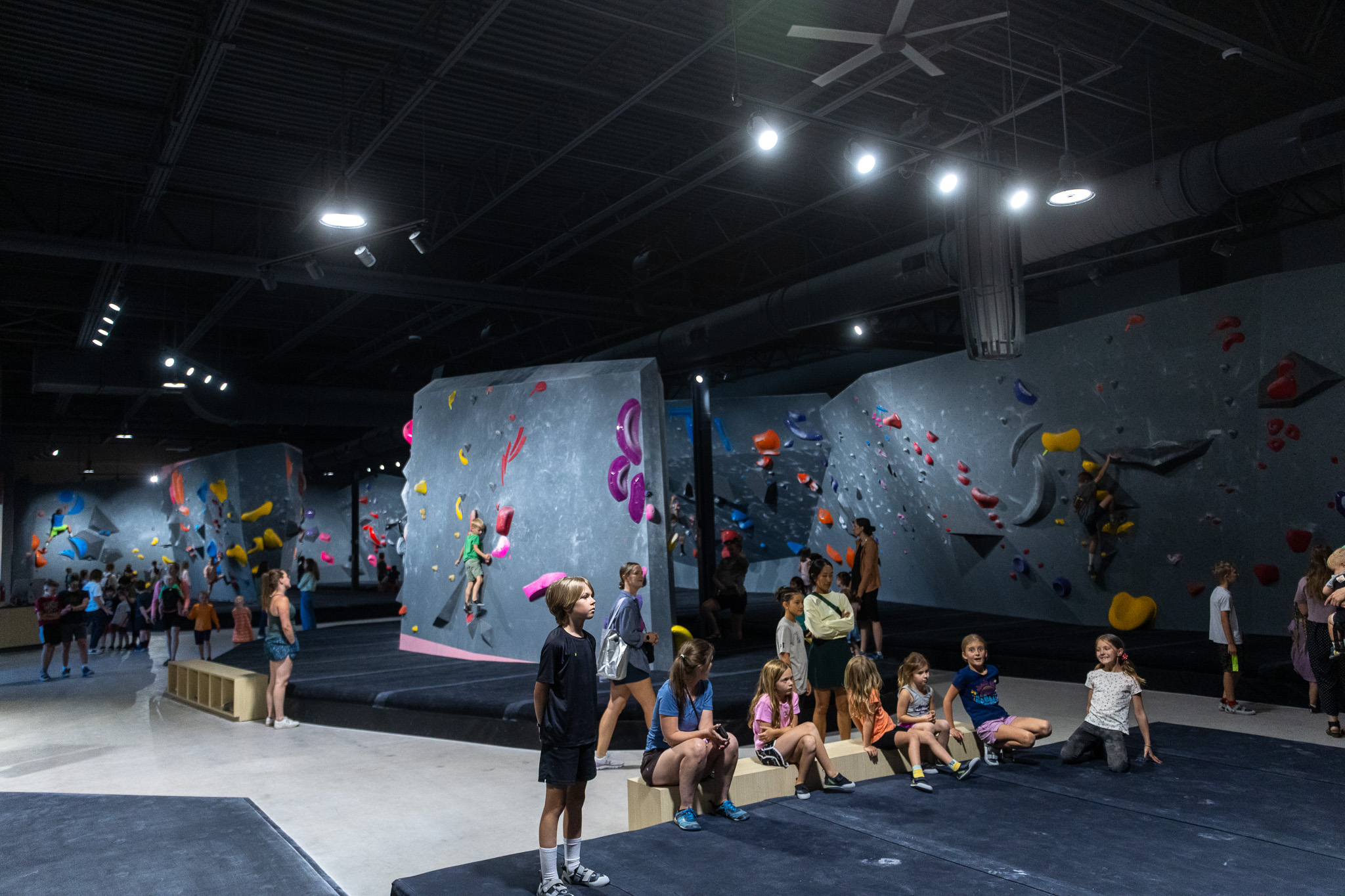
At Shift, we can answer with numbers, because we planned for this question: our four most accessible circuit colors hold 30+ climbs at any given time, including on our 61-foot overhang, over 12-14 inches of flooring. The steep wall isn't the advanced corner of our gym. It's everyone's wall, at every level, which is exactly what a steep wall should be.
The bottom line
Beginners don't need to avoid overhangs. They need to avoid overhangs with nothing set for them - and honestly, so does everyone else. Find a gym where the steep terrain has easy climbs, and it will quietly become the best teacher in the building.
Want to test the theory? Your first visit here comes with a tour, free rentals, and a yellow circuit that runs straight across the steep stuff. Bring your psych!
