




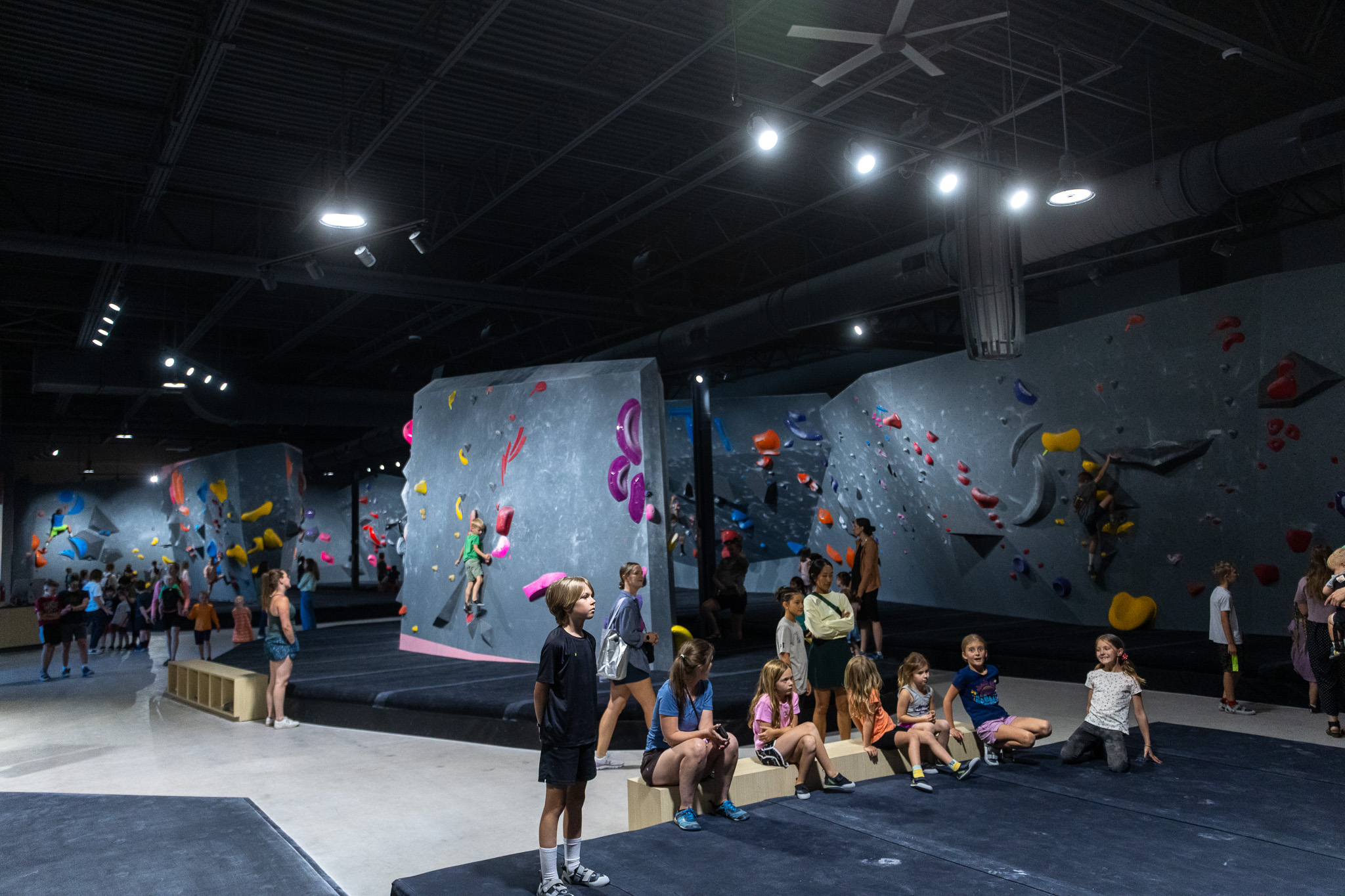
One of the greatest benefits of bouldering is how little equipment it requires. Unlike traditional fitness routines or rope-heavy climbing disciplines that demand technical safety hardware, carabiners, and safety harnesses, bouldering streamlines your gear checklist down to the bare essentials.
However, as a beginner stepping onto the gym floor, you will see a wide variety of tools being used. From our complimentary bouldering shoes and chalk, to our Tension Board 2, or our hangboards.
To help you understand the purpose behind these items and how they accelerate your progress, this guide breaks down the physical properties of climbing gear, from your very first pair of rental shoes to your eventual transition into our dedicated strength training areas.
At a Glance: The Bouldering Toolkit
1. Bouldering Shoes: The Engineering of Friction
You cannot climb safely or effectively in traditional running shoes. Running shoes are designed with thick, cushioned foam midsoles and flexible toe boxes that collapse under pressure.
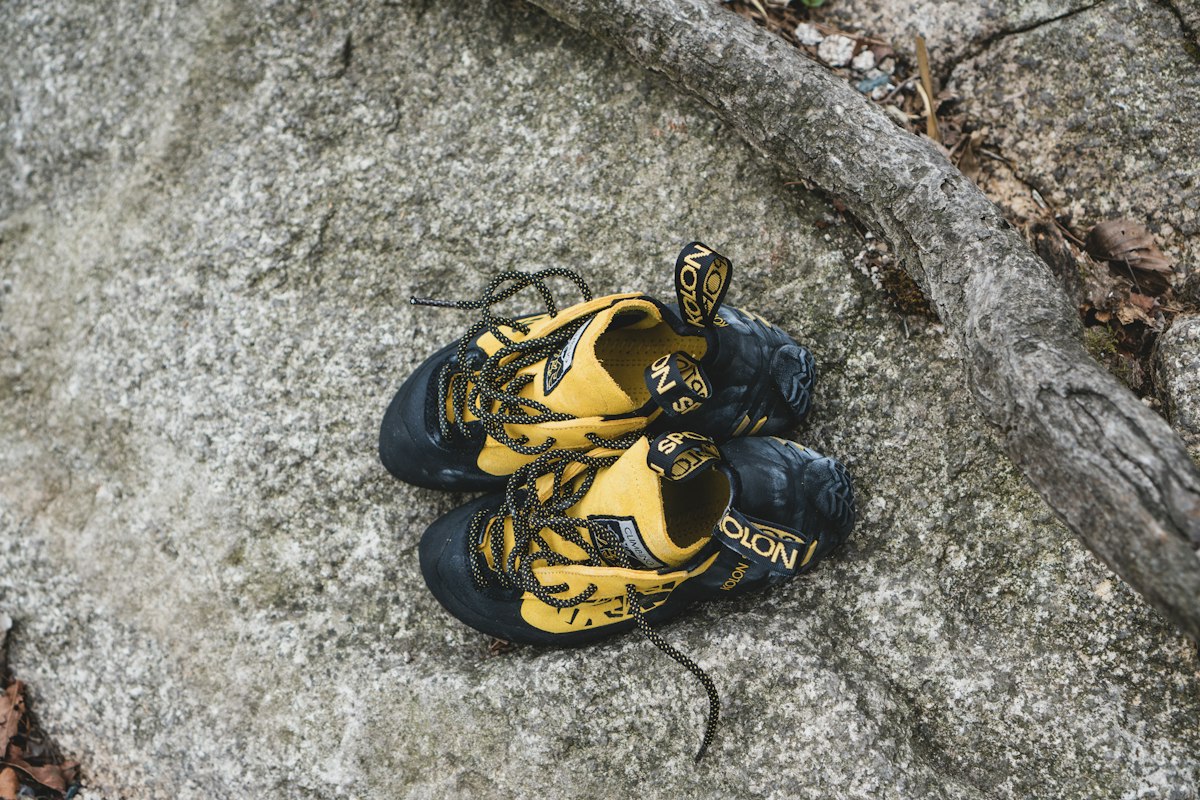
Bouldering shoes are entirely different athletic tools. They are engineered with thin, rigid, high-friction rubber soles designed to compress your toes slightly forward. This stiffness turns your foot into a powerful platform, allowing you to press down on tiny, footholds to gain secure "purchase".
When you look for your first pair of shoes at our front desk, remember:
- The Fit: They should fit snugly without any dead space around your toes or heel, but they should never cause pain.
- The Rubber: The sticky, specialized rubber compound is what allows you to execute technical movements like smearing, where you confidently press your shoe directly against flat wall angles using pure friction rather than a plastic ledge.
2. Climbing Chalk: Defeating Moisture
The fine, white powder you see climbers coating their hands with is magnesium carbonate—commonly known as chalk.
When you climb, your hands naturally sweat due to physical exertion and adrenaline. Moisture destroys friction, causing your fingers to slip off plastic holds unexpectedly. Chalk does not make your hands stickier on its own; instead, it acts as a premium drying agent, absorbing sweat and oil so your skin can make clean, high-friction contact with the texture of the hold.
3. Transitioning to Training Tools: Hangboards, TB2 & Strength Gear
As you progress in your bouldering journey, you will naturally look for ways to break through strength plateaus. This is where a dedicated bouldering facility shines, offering specialized cross-training equipment designed to complement your time on the wall.
Hangboards
Suspended in our training area, you will find wooden hangboards featuring an array of shallow ledges and pocket widths. These are structured training tools designed for isometric finger holds.
- Time Under Tension (TUT): Hangboard protocols focus heavily on Time Under Tension– holding your body weight cleanly on a specific edge width for a set number of seconds to build tendon density and prevent injuries.
- The Half Crimp vs. Open Grip: When utilizing a hangboard, beginners should completely avoid a "closed crimp" (where the thumb wraps tightly over the index finger). Instead, we encourage beginners to use a half crimp (fingers bent at a 90° angle) or an open grip (fingers dragged straight down). These positions maximize strength gains while protecting your finger pulleys from unnecessary strain.
The Tension Board 2 (TB2)
Right next to our training zone, you will find the Tension Board 2. This is a premium, app-controlled LED training board set on a customizable, tilting wall frame. The board features a perfectly symmetrical grid of custom-sculpted wooden and ergonomic plastic holds.
- Global Connectivity: Using a smartphone app via Bluetooth, you can illuminate thousands of pre-designed bouldering routes created by a worldwide climbing community.
- Custom Wall Angles: The physical board can be adjusted from a gentle overhang to a steep, horizontal roof cave. This allows you to practice the exact same boulder problem at a 20° tilt for technique, and then drop it to a 40° tilt to build raw, explosive power as your core strength evolves
The Traditional Fitness Area
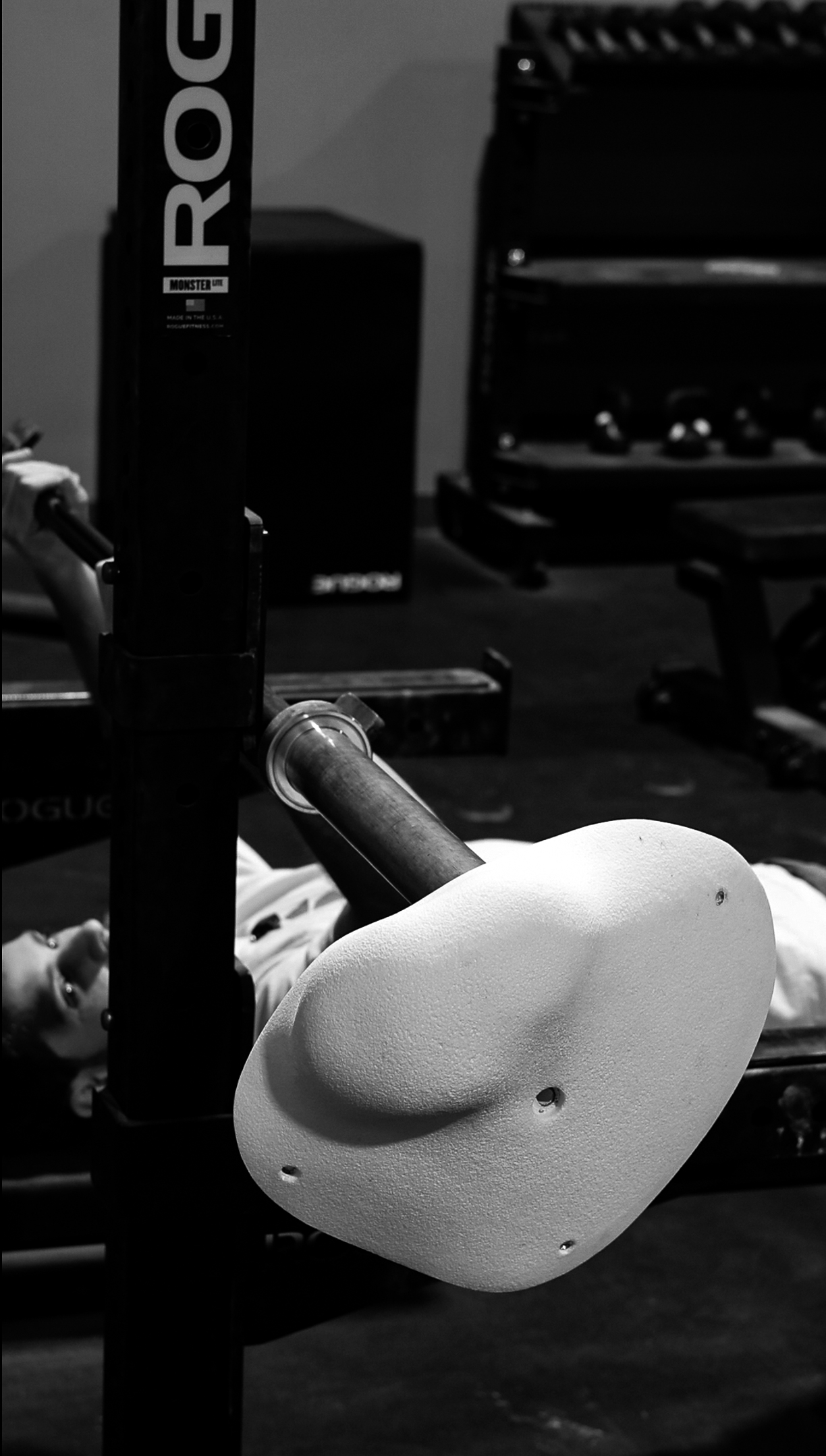
Bouldering requires immense full-body tension, hamstring engagement for heel hooks, and core power. To support your climbing, our facility features a dedicated fitness area equipped with premium Rogue squat racks, free weights, and lifting platforms. Supplementary weight training allows you to correct muscular imbalances and build the explosive leg and core drive required for dynamic climbing styles.
4. We want to help you.
Navigating gear and training thresholds can feel intimidating, which is why Shift does things differently. Our facility is managed by staff who are deeply invested in your climbing journey and experience.
Bouldering is an independent sport where you execute the movement yourself, but it is highly community dependent. If you ever want an evaluation on how your rental shoes fit, a quick lesson on proper half crimp form, or a personalized introduction to using the Rogue squat racks safely, our staff is always nearby to help.
Just show up, grab a fresh pour of locally roasted coffee from Madcap at our front desk, and let’s get to work!
