





Parents ask us some version of this every week: is climbing safe for my kid, is it good for them, and how do I pick a gym? Great questions with real research behind them - youth-sport science has studied exactly what keeps kids healthy, progressing, and in love with a sport. So instead of "trust us," here's the evidence, organized as a checklist you can use on any gym. Including ours.
1. Safety systems you can see (and ask about)
Climbing's injury research is specific about what matters. A 2025 study of bouldering injuries found most incidents are landing-related - which makes flooring the first thing to evaluate. Ask any gym: how thick is the padding, is it continuous, and how are fall zones kept clear?
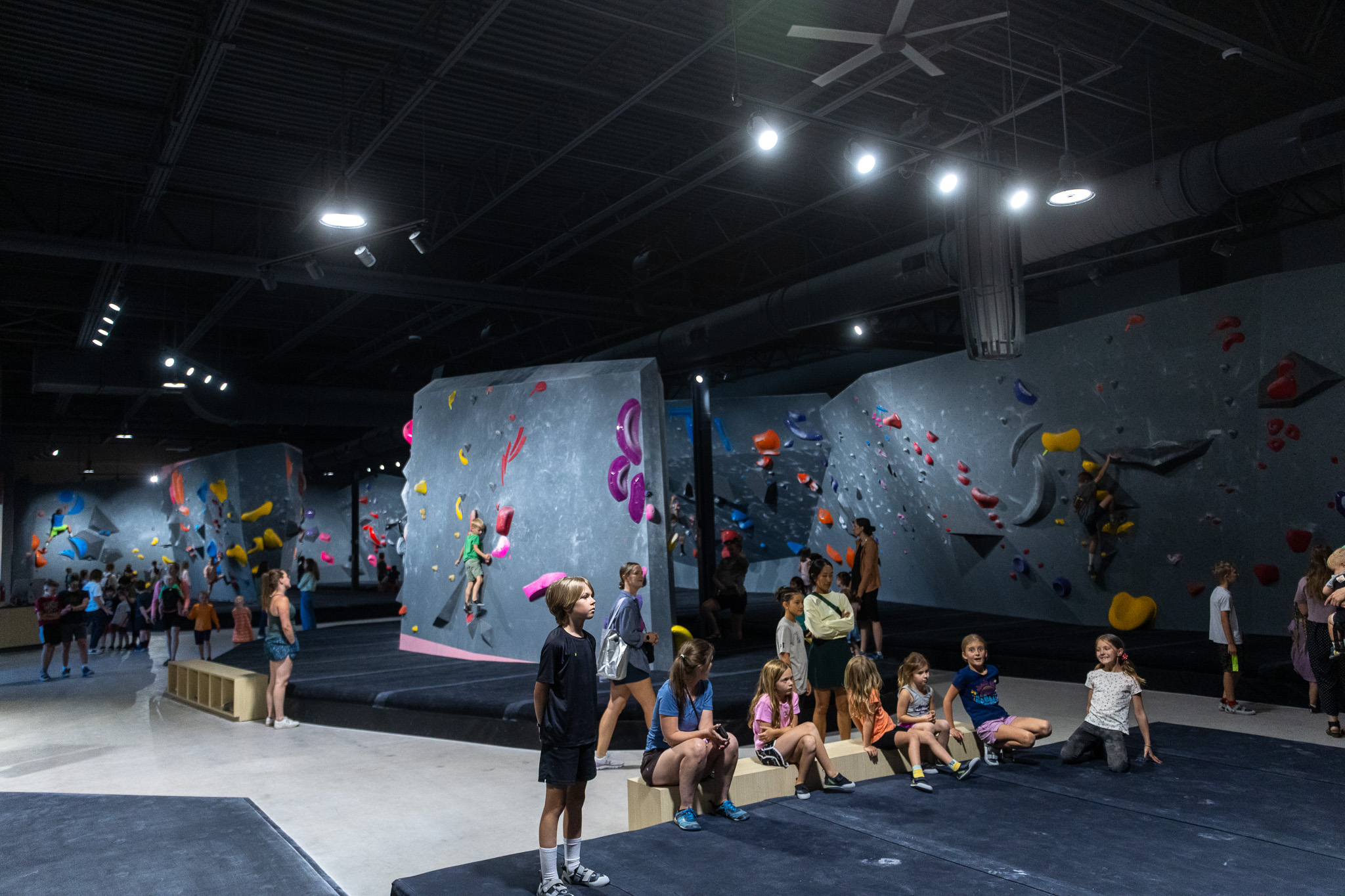
Our answers: 12 to 14 inches of engineered memory-and-polyurethane-foam flooring, 4,300+ square feet of it, continuous under every climbing surface, with extended fall zones. Our walls were engineered to EN 12572-2:2017 (the international bouldering-wall standard) with independent US structural review. And our supervision rule is firm: climbers under 14 have an adult actively with them on the floor, always.
One more research note parents rarely hear: studies of young competitive climbers flag growth-plate stress in fingers from intensive training on small holds. That's why our youth programming keeps kids off that style of training entirely - young hands belong on big holds and varied movement, and a gym should be able to tell you its policy on this without blinking.
2. Climbs they can actually succeed on
The research on why kids stay in sports is blunt: enjoyment predicts continued participation more than anything else measured, and a feeling of competence matters too. A kid who succeeds early comes back; a kid who fails all afternoon doesn't - and a gym where only four climbs are doable for a beginner is an afternoon of failing.
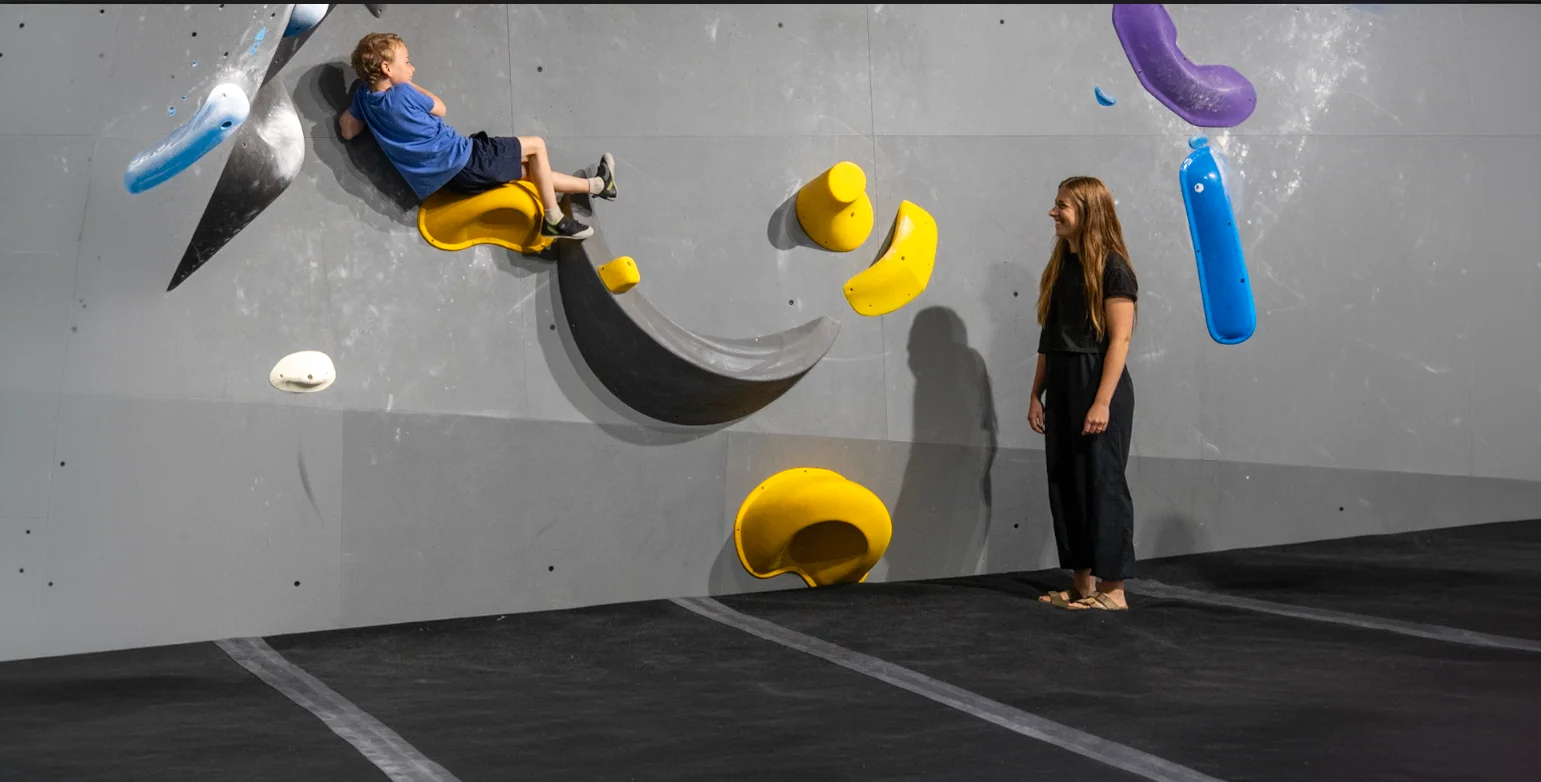
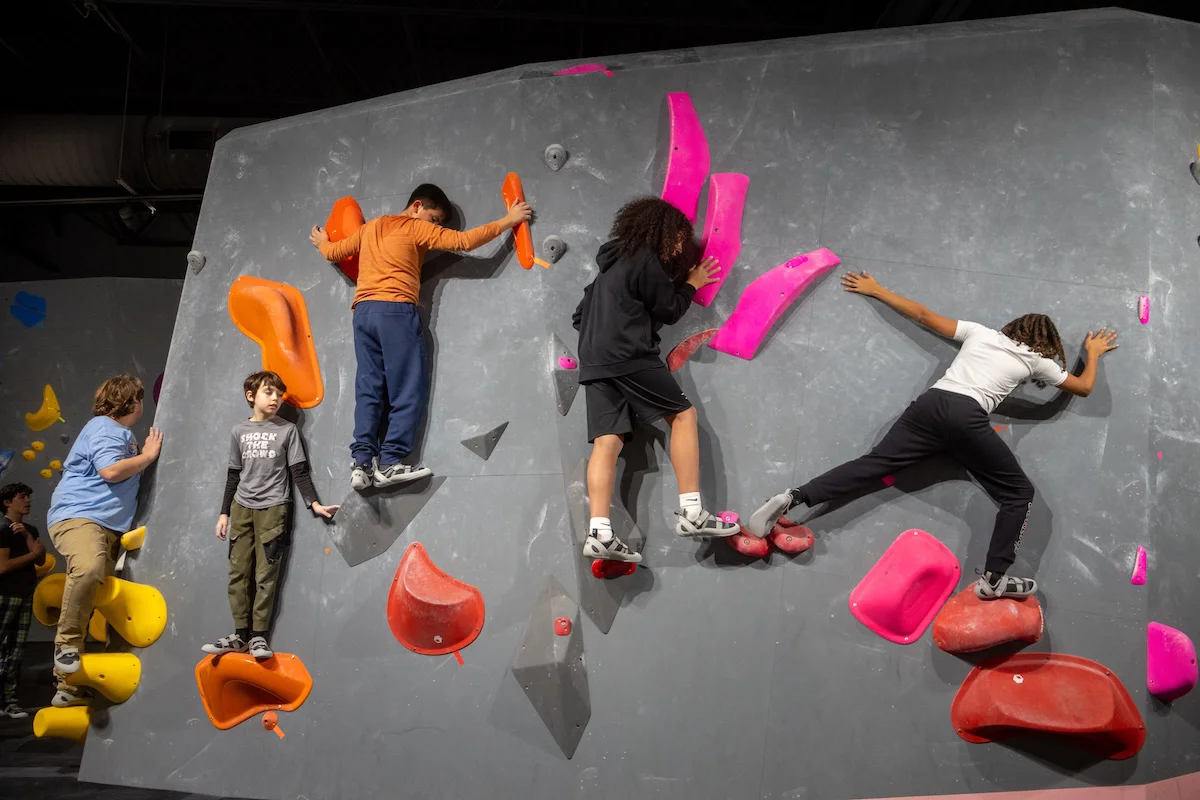
This is the question we most wish parents would ask every gym: "How many climbs will my kid be able to do today?" Our answer is 30 or more, every day, across our four most accessible circuit colors - and our circuit system (colors instead of V-grade numbers) means kids chase "the yellow one by the window," not a number that invites comparison. They progress without ever being told where they rank.
3. Coaching that knows kids, not just climbing
The 2025 international Delphi study on quality youth sport puts appropriate instruction and a safe, positive climate at the core of good programs. In a climbing gym, that looks like: coaches who teach falling before they teach climbing, sessions built by age group rather than one-size-fits-all, and instruction that asks "how do you think you could solve this?" instead of barking beta.
Our youth programs are structured exactly this way - afterschool, homeschool, and middle/high-school groups, each sized and coached for the age on the floor. And the climbs themselves are set by a program led by an owner certified to USA Climbing Level 5 (the organization's highest routesetting certification - Climbing Magazine has interviewed him as a setter at that level) - which matters for kids more than anyone, because easy climbs that are still interesting are the hardest climbs to set well.
4. An environment that invites movement
The CDC's youth physical-activity guidance calls for 60+ minutes of daily activity including muscle- and bone-strengthening movement - and names climbing as exactly that kind of exercise. The environment piece matters too: activity should be varied, age-appropriate, and enjoyable, in a space kids want to be in.
Practical translation for a Michigan parent: our whole facility is air conditioned, so July sessions are as good as January ones; the space is bright and open with clear sightlines (you can see your kid from the café); and there's no intimidating "back room" culture - beginners and strong climbers share the same walls, on their own colors.
5. Belonging
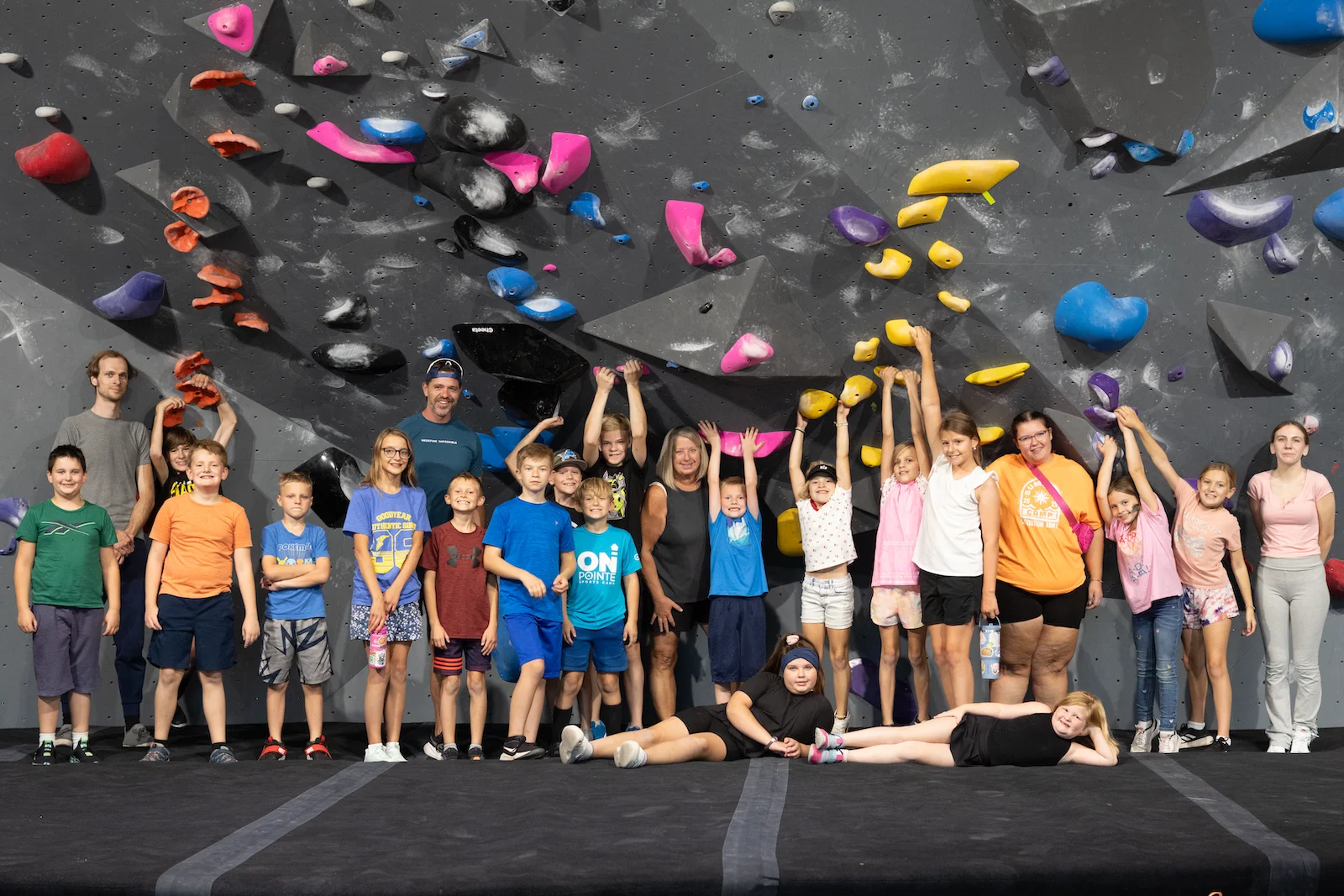
The same participation research keeps landing on a quiet factor: friends. Kids stay in sports where they feel they belong. Watch any gym for twenty minutes: are kids talking to each other on the mats? Do staff know names? Does anyone laugh when they fall? That's the whole test. It's also, honestly, the thing we're proudest of here - climbing is an individual sport that somehow makes friends faster than team ones.
The checklist, portable version
Take this anywhere: thick continuous flooring + a real supervision policy + a no-campus-training-for-kids answer + 20+ climbs your kid can do today + age-grouped coaching + AC in summer + kids talking to each other on the mats. Any gym that clears all seven is a good place for your kid. We built Shift to clear them with room to spare - come see for yourself, first visit's easy and the tour is free.
