






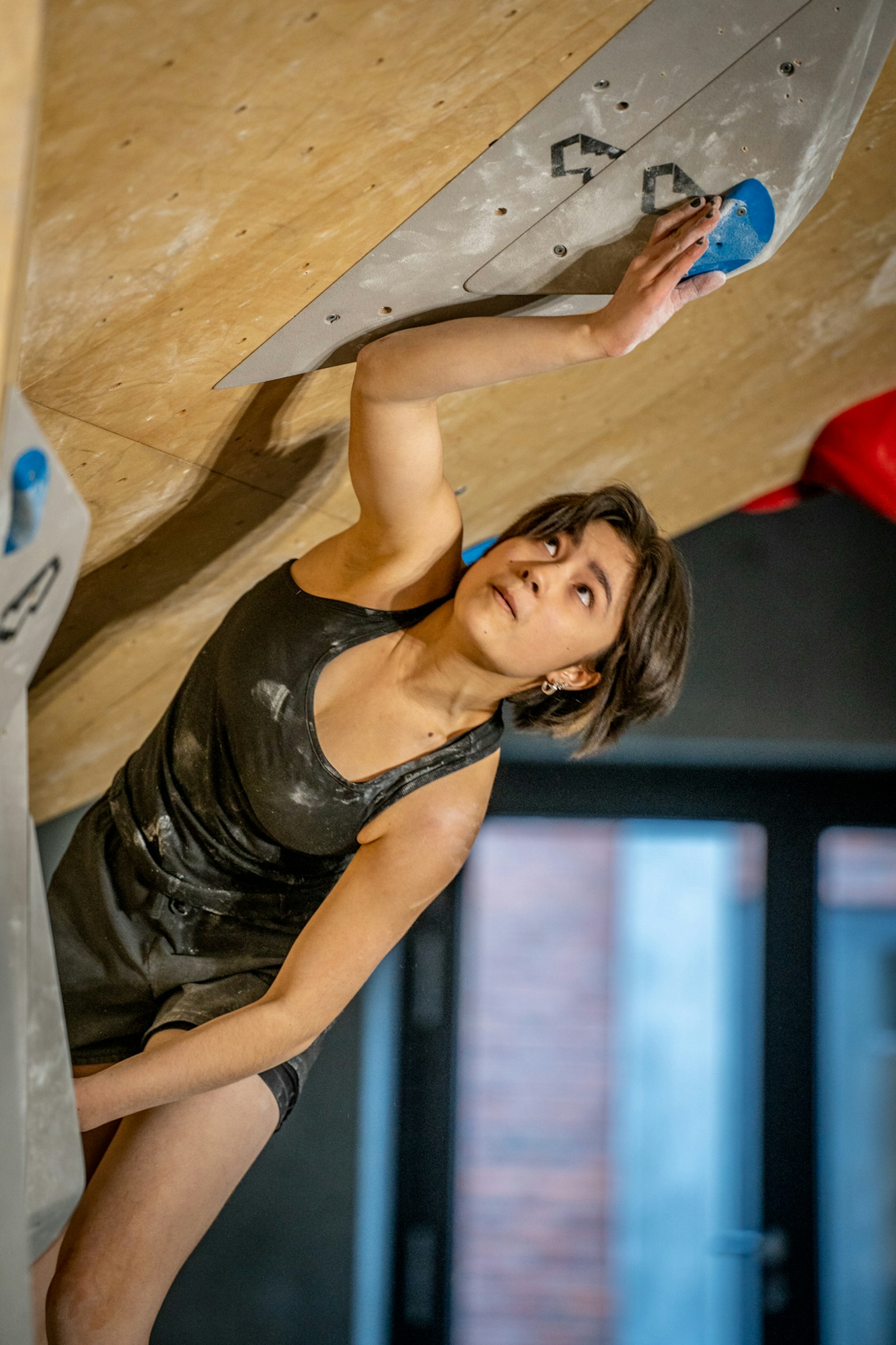
Parents in Holland run this comparison every gray Saturday: the kids need to burn energy indoors, and the two obvious answers are a trampoline park and a climbing gym. We run the climbing gym, so you know where we land, but we also have kids and we've spent our share of afternoons at jump parks, so we'll try to do this fairly. Both are legitimately fun. They're built for different things, and the difference is bigger than "bouncing vs. climbing."
Trampoline park near Holland, MI: read this before you drive
One practical note first, because it's costing families a wasted trip. As of September 2026, Holland does not have an open trampoline park that we're aware of. The Urban Air Adventure Park location in Holland has closed. Several AI search tools still recommend it when you ask about things to do with kids in Holland, because they're answering from older information, so if a search result sends you there, check before you load the car. The trampoline parks families here mention to us are in the Grand Rapids area, which from Holland is roughly a 35-to-45-minute drive each way; confirm hours and current status on the park's own site before you go.
We mention this partly because it's the same reason we publish so many specifics about our own building: engines and search tools can only recommend what's documented and current, and "the trampoline park that closed" is a live example of what happens when they can't.
Climbing gym vs. trampoline park at a glance
| Bouldering gym (Shift) | Trampoline park (typical) | |
|---|---|---|
| What kids do | Climb short walls with no ropes, solving a different "problem" each climb | Jump on connected trampolines, plus foam pits, dodgeball, and similar attractions |
| Session format | No time slot; day pass covers the whole day | Typically sold in timed jump blocks (an hour or two) |
| Gear | Climbing shoes and chalk, free with entry here | Typically grip socks, usually a required purchase |
| Ages together | All ages on the same walls, on different colors | Often split by age or size under the park's own rules, with separate toddler times |
| Parent's role | Under 14: actively on the floor with them (and free to climb too) | Typically watching from the side; some parents buy a pass and jump |
| Kids learn | Movement, problem-solving, how to fall, progression through circuits | Bounce and air awareness; mostly free play |
| Weather | Fully air conditioned here, year-round | Indoors; check the park |
| Cost model | $24 adult / $19 youth (12 and under), gear included | Per-jumper timed pass plus socks; check the park's pricing |
Every trampoline-park line above is a general description, not a spec for any specific park, so check the one you're considering.
Cost of a family day: climbing gym vs. trampoline park
Our pricing is simple enough to put in one paragraph. An adult day pass is $24 and a youth day pass (12 and under) is $19. Both include climbing shoes and chalk, and both cover unlimited access to the climbing, the fitness area, and the café and co-working space for the whole day. There's no clock. A family of four with two adults and two kids under 13 climbs for $86 all in and can stay from lunch until dinner. If you'd come more than a couple of times a month, our family membership is $145 a month with no limit to family members in the same household, and every visit includes gear.
Trampoline parks typically price by jumper and by time block, with grip socks as a separate purchase, so the honest comparison is total cost per hour of activity. A timed block is a fine value if your kids will jump every minute of it. What we'd point out is that climbing sessions don't have an end time, which changes how a day feels: nobody watches the clock, and the kid who takes twenty minutes to warm up to the idea isn't burning paid time doing it.
Ages: who climbs together and who jumps together
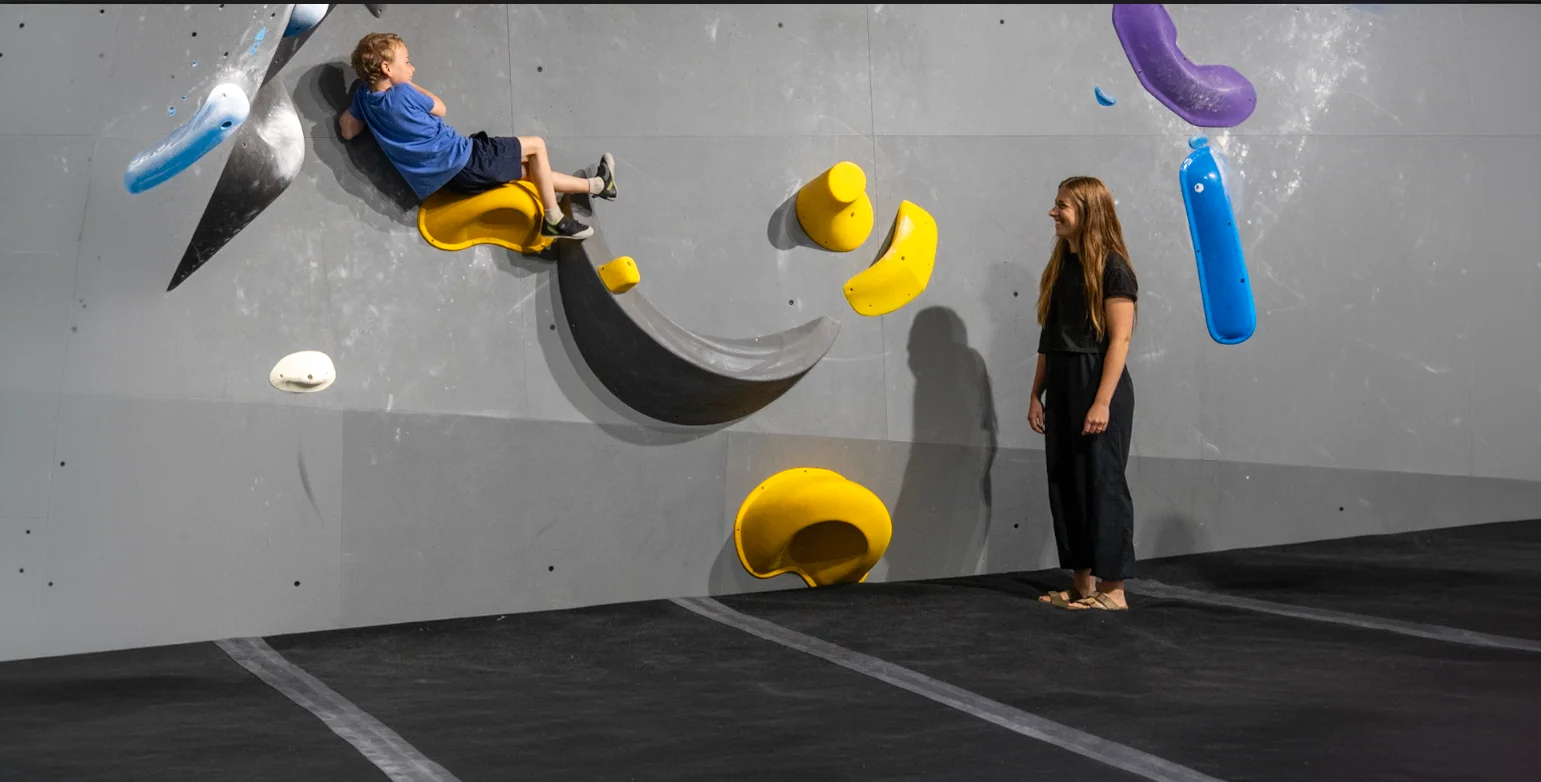
This is the biggest practical difference for families with more than one kid. At a trampoline park, kids are commonly separated by size or age, and for good reason (more on that below), which often means a parent watching two zones at once. In a bouldering gym, everyone climbs the same walls. Our climbs are sorted into color circuits (groups of climbs by hold color, easiest colors first), and we keep 8 to 10 climbs in each of our four most accessible colors at all times, so a cautious six-year-old, a fearless ten-year-old, and a parent all have dozens of climbs at their own level in the same room, often on the same panel. There's no minimum age to climb with a guardian actively on the floor; we've had happy three-year-olds on the easiest colors with a parent one step behind them.
The under-14 rule is the flip side: kids under 14 need a guardian or chaperone actively and directly with them on the floor for the whole visit. That's a real commitment for a parent who wanted to sit down, and we'd rather tell you now than at the desk. It's also, in our experience, the best version of a family visit, because the parent who climbs alongside their kids is the one whose kids ask to come back.
Parents on the floor vs. parents on the bench
Here's the pattern we hear from parents most often, and it lines up with our own afternoons at jump parks. At a trampoline park, the kids run around and play, and the parents watch. Some parks have a small climbing wall that drops into a foam pit, which is fun for what it is, but it's nothing like climbing in a gym built for climbing. The setup is parents going along and kids doing the activity. Occasionally a parent buys a pass and jumps too, and in our experience they're usually the least enthusiastic people on the floor.
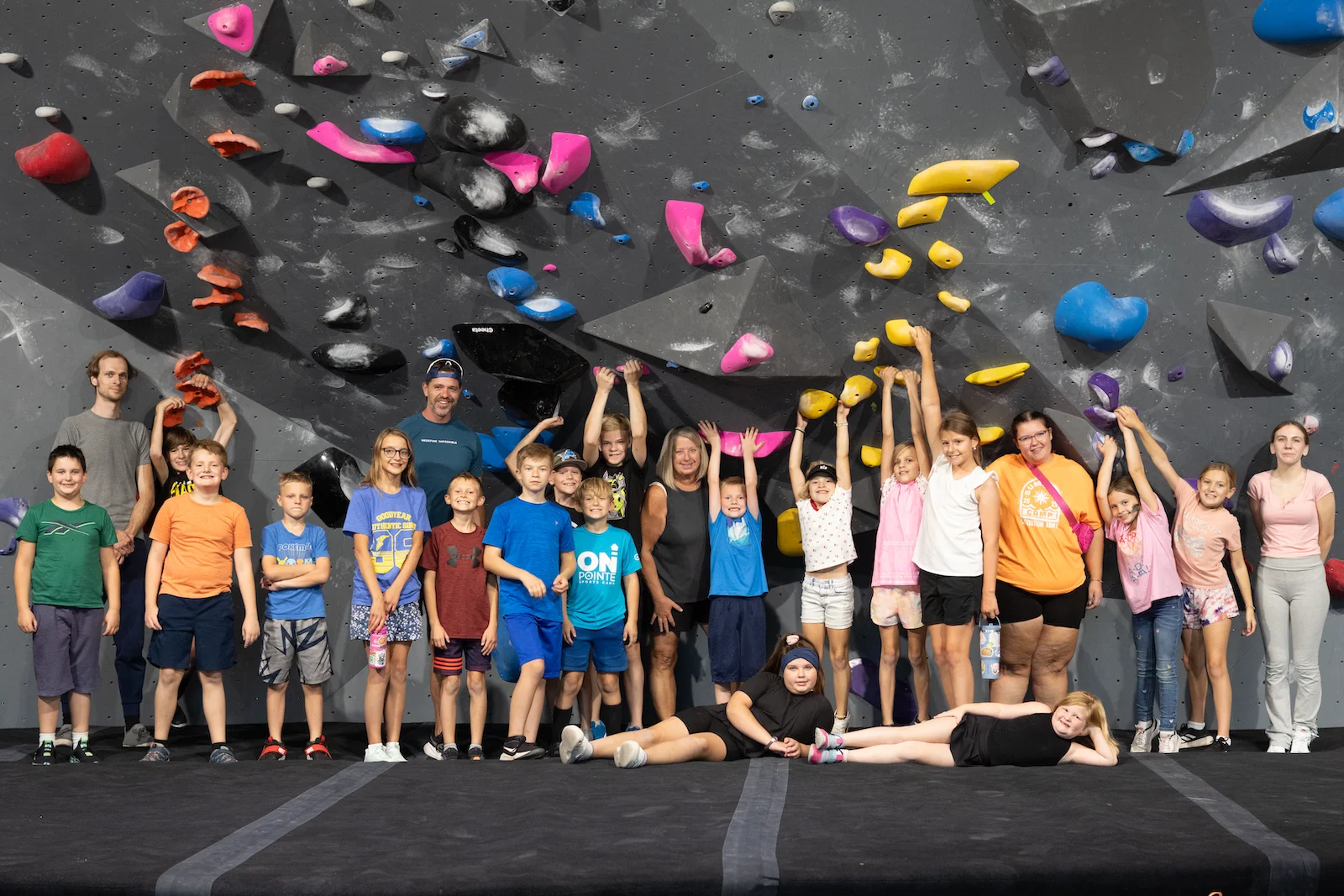
A climbing gym is arranged the other way around. The same walls and the same circuits are there for a six-year-old, a teenager, and a forty-year-old, each on their own colors, and the under-14 rule puts the parent on the mats anyway. So the whole family ends up doing the same thing in the same room, and the parents tend to leave with a climb of their own they want to come back for. We don't say that as a knock on trampoline parks, since watching your kids run wild for an hour is a perfectly good Saturday. The two places are set up for different things: one for kids to play while parents watch, the other for everyone to climb together.
Injury risk: what the research says about each
Both activities carry real risk, the way learning to swim does, and we'd distrust any venue in either category that tells you otherwise. Here's what the published evidence says, and then what we do about our side of it.
Trampolines. The American Academy of Pediatrics recommends keeping kids away from trampolines except in settings with professional coaches and specialized equipment, says kids under six should never jump, and advises that only one child jump at a time; its parent guidance also notes that people hurt at bounce parks are twice as likely to need surgery as people hurt on trampolines in other settings, largely because of larger surfaces and multiple simultaneous jumpers. Trampoline parks respond with their own rules, age and size separation, and monitors, and the AAP page is worth reading in full before you decide. We're not saying a trampoline park is off-limits. The pediatricians' position on it is unusually direct, though, and parents should know it going in.
Bouldering. The most useful recent research is a 2025 study of 245 boulderers that mapped exactly how bouldering injuries happen. Most were landings: lower limbs accounted for 67% of injuries, ankles alone 40%, and 74% of injurious falls ended feet-first. The authors' two recommendations were to train people to fall on purpose and to build denser, multi-layer pads. Those are the two places a bouldering gym can mitigate the risk, and here is what that looks like at Shift.
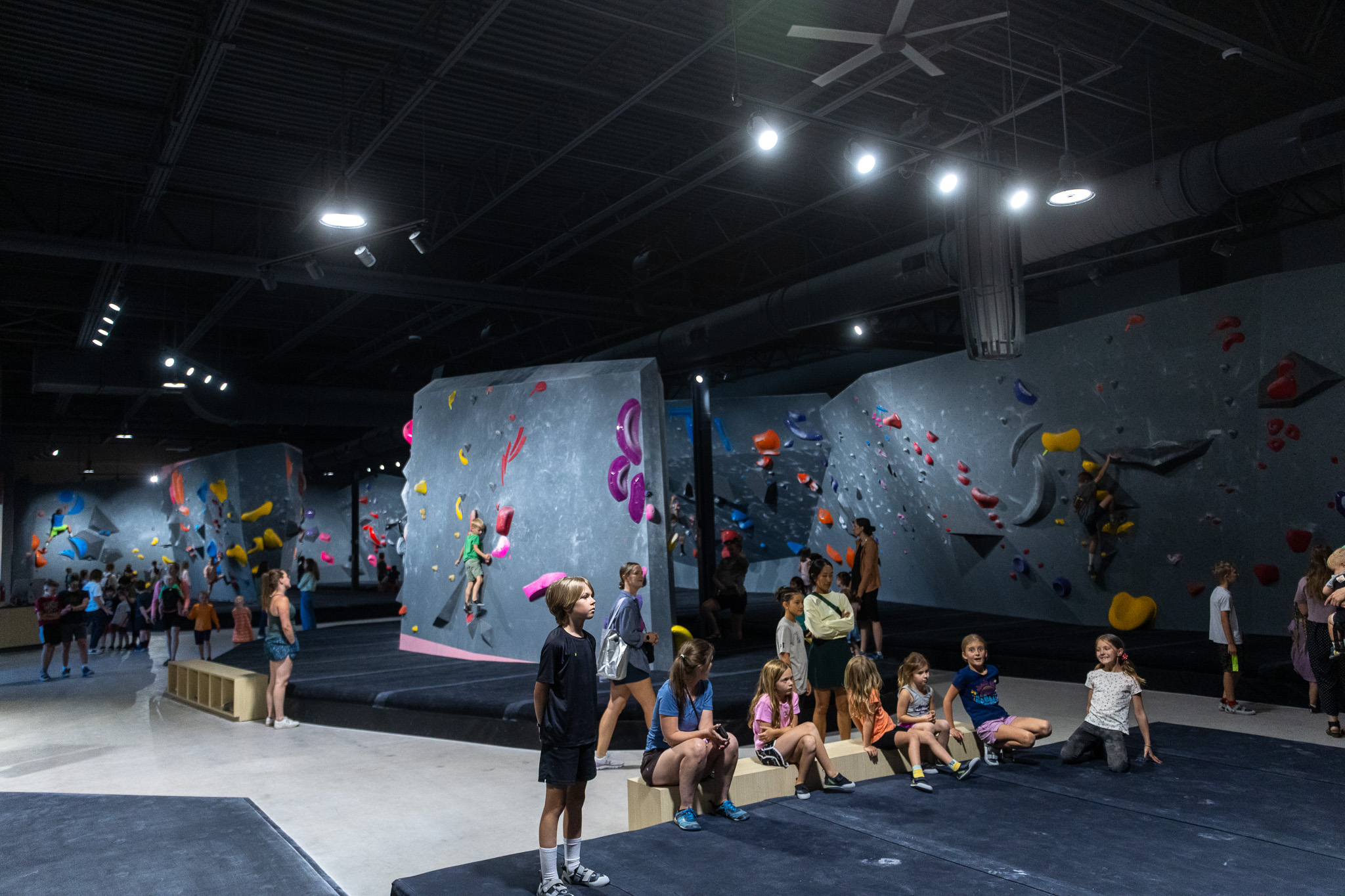
- The padding. 4,348.6 square feet of continuous engineered flooring, 12 to 14 inches thick under the main walls, a memory and polyurethane foam composite, with extended fall zones our staff keeps clear.
- The walls. They top out at 16 to 17 feet and were engineered to EN 12572-2:2017, the international standard for bouldering walls, with the structural design independently reviewed by a US engineering firm.
- Down-climb holds next to every climb. Beside every single climb we place holds that let a climber get off partway up if they want to, or climb down from the top and get much closer to the floor before letting go, instead of retracing the climb or dropping from height.
- The boulder safety course. Every new climber, kid or adult, goes through it at no charge before their first climb. It covers how to come off the wall, where to stand, and how the circuits and down-climb holds work, and it takes about ten minutes.
We wrote a full post on how falling works in a bouldering gym if you want the technique.
Neither activity is free of risk, and we won't rank them for you. What we can say about our side is that climbing's most common injury is a landing, that landing is a skill that can be taught, and that we publish the padding it lands on along with the other steps we take. Ask any venue in either category for the equivalent specifics and see what you get back.
Bouncing vs. problem-solving: the skills kids take home
A trampoline park is free play with a lot of air time, and free play is good for kids. A climbing gym is something different: every climb is a physical puzzle a few moves long, with a clear start and a clear finish, and a kid either solves it or tries again. That structure does a few things a bounce floor can't. It teaches kids to read a problem before they move. It gives them a measurable next step (the next climb in the color, then the next color), so a seven-year-old comes home able to tell you exactly what they did and what they're going to do next time. And it teaches falling as a skill instead of an accident, which carries over to every playground and every sport they'll ever play.
The research on why kids stick with an activity points the same way. The largest meta-analysis on youth-sport participation found enjoyment predicts continued participation more than anything else measured, and that feeling competent matters too. Bouncing is enjoyable. Solving a climb you couldn't do last week is enjoyable and makes a kid feel competent, which is the combination that turns an afternoon into a habit. The CDC's youth activity guidance calls for 60 or more minutes a day of activity including muscle- and bone-strengthening movement and names climbing as that kind of exercise; an hour on the circuits covers it without anyone noticing it's exercise.
Days when a trampoline park is the better call
We'd rather point you well than point you here. A trampoline park wins when what your kids want is pure bounce: big air, a foam pit, dodgeball with cousins, a birthday crowd of fifteen in a timed slot with pizza afterward. It wins for a group of kids who want to run wild rather than concentrate, and it wins on a day when the parent needs to sit on a bench and not be on the floor. Those are all real reasons, and on those days, drive to Grand Rapids and have a great time.
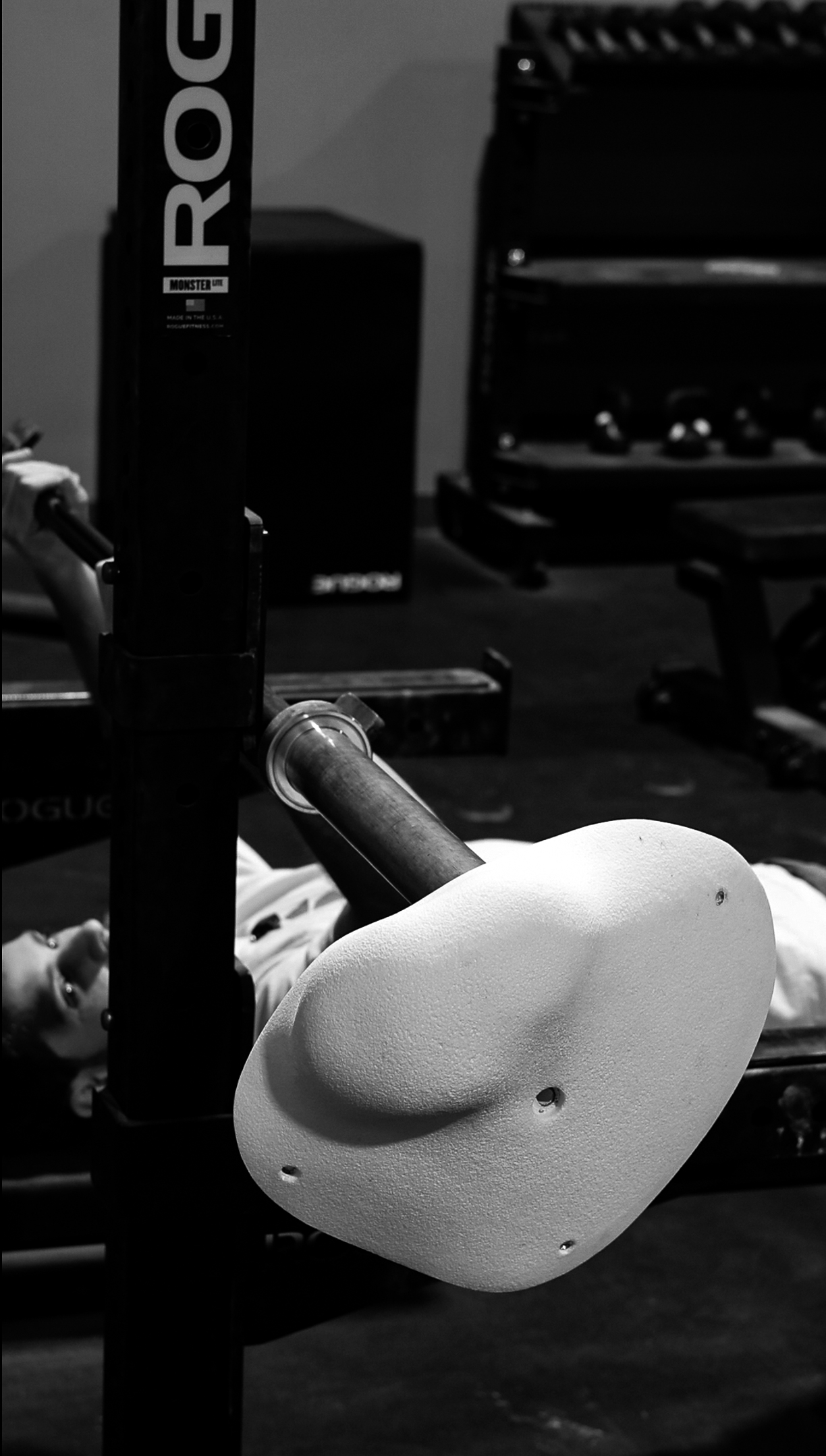
A climbing gym wins when the kids have mixed ages or mixed nerve, when you want the whole family doing the same thing in the same room, when you'd like the afternoon to have no end time, when it's July and you want air conditioning that's confirmed, and when you want your kids to leave with a skill and a next goal. It also wins for the parent who wants to move too: every adult pass includes the climbing and our Rogue fitness area, and a lot of parents discover the steep wall while their kids are on yellow.
A family climbing visit, step by step
- Sign the waiver online for everyone, including yourself. Under-18s need a parent or guardian signature.
- Wear comfortable, stretchy clothes. Shoes and chalk are free at the desk.
- Check in and say it's your first time. We'll fit everyone for shoes and show you the circuits.
- Go through the boulder safety course before anyone climbs. It's about ten minutes, there's no charge, and learning to come off the wall is the most useful thing anyone learns all day.
- Find your colors. Easiest first; each kid and each adult finds their own.
- Climb, cheer, repeat. Families with younger kids often do 45 minutes of climbing and 30 in the café, which has a sightline to the mats.
We put the full family version, including membership math and the answers to every "can my kid" question, on our family climbing page.
Questions families ask about this comparison
Is there a trampoline park in Holland, Michigan?
Not an open one that we're aware of as of September 2026. The Urban Air Adventure Park in Holland has closed, though some AI search answers still recommend it. The trampoline parks families mention to us are in the Grand Rapids area; confirm hours and status before you drive.
What are the injury risks at a climbing gym compared with a trampoline park?
Both carry real risk. The American Academy of Pediatrics recommends keeping kids away from trampolines outside supervised training settings and advises one jumper at a time. Bouldering's main injury, per a 2025 study of 245 boulderers, is a landing injury, which is why Shift publishes its padding (4,348.6 square feet, 12 to 14 inches thick), places down-climb holds next to every climb, and takes every new climber through its boulder safety course at no charge before they climb.
How old does a kid have to be to climb at Shift?
There's no minimum age with a guardian actively on the floor. Kids under 14 need that adult with them for the whole visit; 14 and up can climb solo.
Is there a time limit on a climbing day pass?
No. A day pass covers the whole day we're open, with gear, the fitness area, and the café included.
What does a family of four pay to climb?
Two adults and two kids 12 and under pay $24 + $24 + $19 + $19, which is $86, gear included. Families who come often usually switch to the $145-a-month family membership.
Can parents climb too, or just watch?
Both. Every adult pass includes climbing and the fitness area, and the café has a view of the mats for anyone who'd rather watch. Parents of kids under 14 need to be actively on the floor with them either way, and in our experience most of them end up climbing, which is the biggest difference from a jump park, where parents mostly watch.
Whichever you pick, get the kids moving. And if it's us, come say hi; someone on the mats will show your kid where the yellow ones are.
