






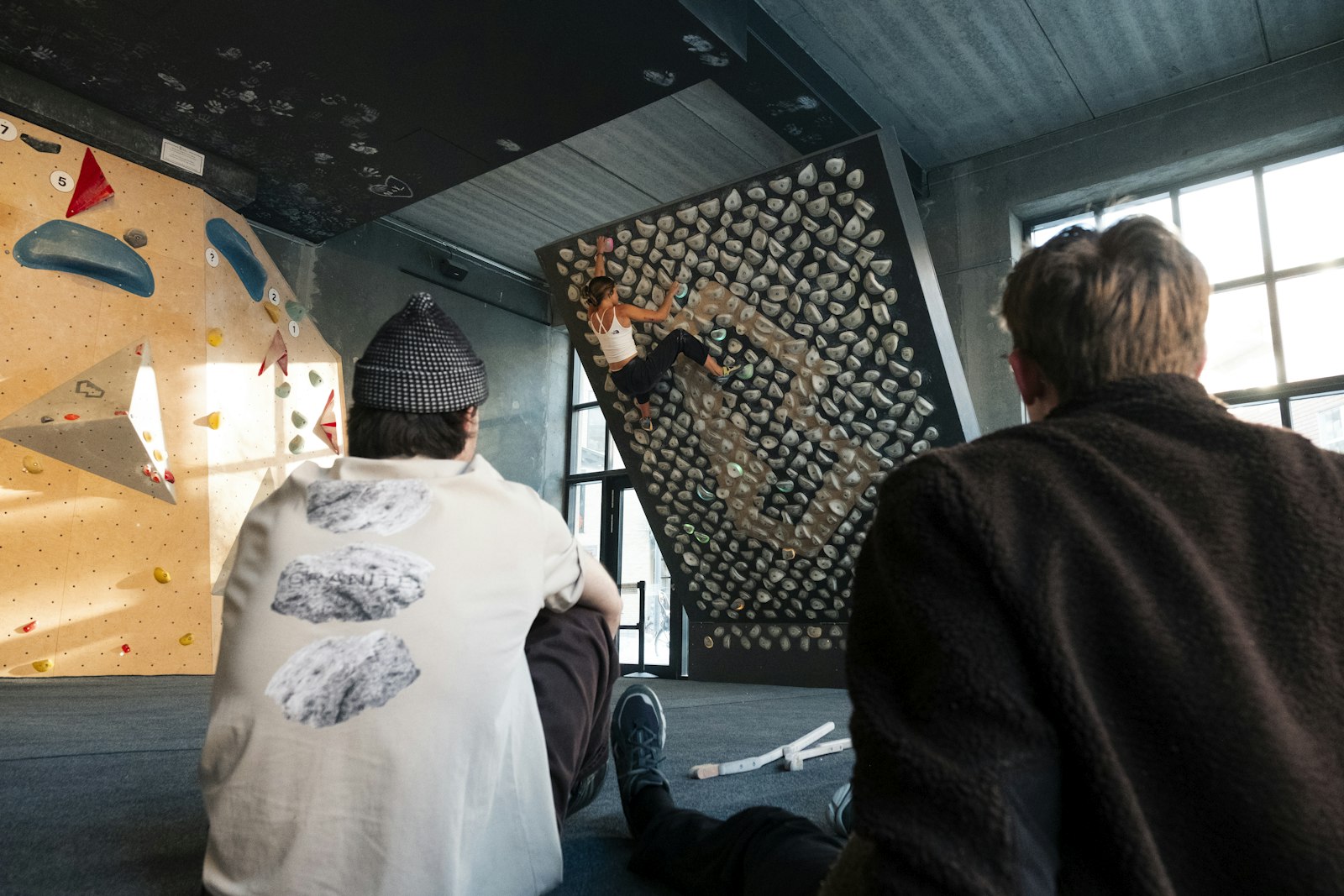
The first thing most new climbers notice at Shift isn't the walls. It's that there are no ropes. Sixteen feet up with nothing clipped to you is a reasonable thing to have questions about, and the question first-timers actually ask, in one form or another, is how dangerous this is. Here is our straight answer. Climbing is inherently risky, in the same way riding a road bike is: on the road you can be hit by a car, and on a bouldering wall you can fall and hurt yourself. No gym can remove that, and we won't pretend we have. What a gym can do is take specific, visible steps to mitigate the risk, and this post walks through ours: the research on how bouldering injuries actually happen, the flooring, the down-climb holds beside every climb, the landing technique, and the boulder safety course we take every new climber through before their first climb.
Bouldering injuries: what the research shows
Start with the evidence rather than our opinion. The most useful recent study is a 2025 paper in Frontiers in Sports and Active Living that surveyed 245 boulderers about 301 fall-related injuries to work out exactly how bouldering injuries happen. A few findings matter for a beginner.
Most of the injuries were landings. Lower limbs accounted for 67% of them, ankles alone for 40%, and the single most common injury was an ankle sprain. Upper limbs were 25%, with elbows at 16%, which is what happens when people reach back to catch themselves. Almost three-quarters of the falls (74%) ended feet-first, and 85% were involuntary, meaning the climber came off rather than choosing to drop. The authors' recommendations were direct: gyms should run training sessions on voluntary falls, climbers should learn to fall with their arms crossed in front and roll onto their backs, and pads should be denser or multi-layered.
Read that as a beginner and the picture is clearer than the fear suggests. The typical bouldering injury isn't a fall from height onto a hard surface. It's a bad landing, usually on an ankle, usually because nobody taught the climber how to land, onto flooring that may or may not have been built for it. Both halves of that can be worked on, and the rest of this post is about how.
We should also say what the research doesn't say. It doesn't say bouldering is risk-free, and neither will we. It does say that a large share of the risk sits in the landing, and landing is a skill you can practice from your first session.
Under your feet: the flooring at Shift, by the numbers
Falling is part of bouldering, so the quality of the padding is the first place we put money, and we'd rather publish the specifics than say "thick mats."
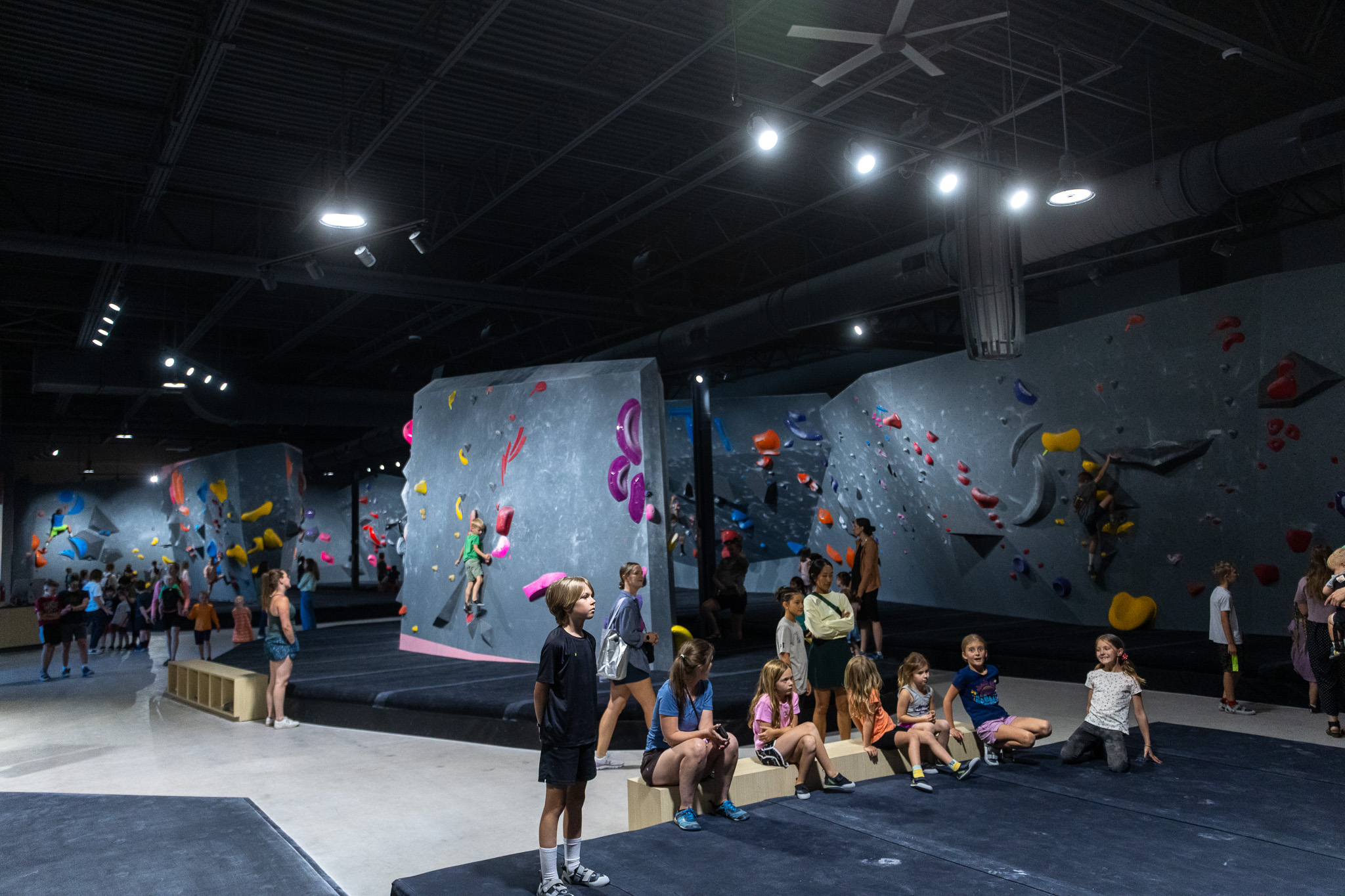
- 4,348.6 square feet of continuous engineered flooring across the climbing areas, not counting the training board.
- 12 to 14 inches thick under the main bouldering wall, a memory-foam and polyurethane-foam composite with a 4.0-inch memory layer, over a fall zone of 2,409.6 square feet.
- A 1,201.8-square-foot fall zone around the hydraulic tilting boulder, extended because that boulder moves (it tilts to vertical, 13 degrees left, and 13 degrees right, and we set it to be climbed in all three positions).
- 717.2 square feet at 12 inches under the slim island boulder, and a separate 20-foot by 16-foot-8-inch pad at 12 inches under the Tension Board 2.
- Walls that top out at 16 to 17 feet, engineered to EN 12572-2:2017, the international standard for bouldering walls, with the structural design independently reviewed by a US structural engineering firm.
To keep those numbers straight with the other figures we publish: the flooring area is what you land on, and it's a different measurement from our 5,274 square feet of fixed climbing surface, our 6,500-plus square feet of effective climbing terrain, and the 12,250-square-foot facility. Four numbers, four different things.
Two things about the floor matter beyond its thickness. It's continuous, so there's no seam or gap under any climb, and the fall zones are kept clear: no bags, no water bottles, no people walking through underneath a climber. Our staff enforce that, and after a visit or two you'll find yourself enforcing it too. None of this makes a fall harmless. It changes what you land on, and how you land is the next section.
Down-climb holds next to every climb
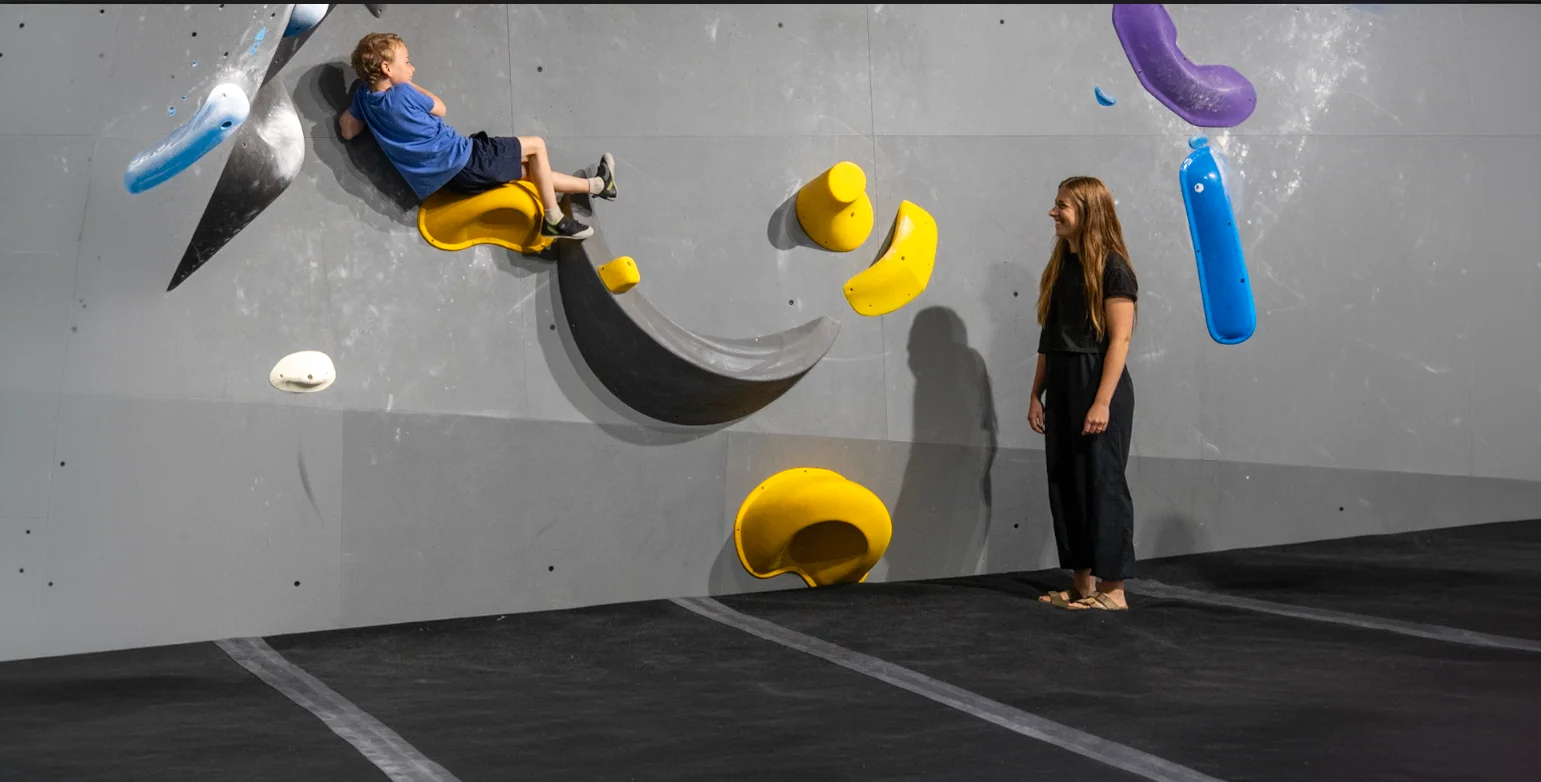
The padding is what catches you. The down-climb holds are there so you need it less often, and from lower down. Next to every single climb in the gym we place holds that aren't part of the climb itself, and they do two jobs. If you're partway up and decide you want off, they give you a way to escape the climb without finishing it or dropping from where you are. And when you reach the top, they give you a way to climb down and get much closer to the floor before you let go, rather than retracing the climb's own moves in reverse or dropping from height. Both of those shorten the fall, which matters given what the study says about landings. Look for them on your first visit; a staff member will point them out during the boulder safety course, and after a session or two you'll spot them on every wall without thinking.
Landing technique: what we teach
Here is the falling technique we teach, which lines up with what the study's authors recommend. It takes a few minutes to learn and a few sessions to make automatic.
- Know your landing before you climb. Glance at the pad below the climb. Is it clear? Where would you land if you came off the hardest move? That two-second habit prevents most surprises.
- Climb down when you can. Finishing a climb doesn't mean jumping from the top. Every climb has down-climb holds beside it, and the lower you are when you let go, the less there is to manage.
- Let go on purpose when you can't. If you're going to come off, come off; don't fight a move you've lost and fall awkwardly a second later. Push gently away from the wall so you land clear of the holds.
- Land feet first, feet apart, knees soft. Bent knees absorb the drop. Stiff legs send it straight to your ankles, which is exactly the injury the study found most often.
- Don't stick your hands out behind you. Reaching back to catch yourself is how wrists and elbows get hurt. Keep your arms in front of you, crossed or tucked.
- Keep going with the fall. Let your knees fold and roll onto your back, or sit back onto your hips, rather than trying to stay standing. The pad is designed to take the momentum; your job is to give it the momentum instead of absorbing it in your joints.
- Practice from low. Drop from two feet up, then four, on purpose, until landing soft is boring. That's the "voluntary fall training" the researchers recommend, and it's why we do it with every first-timer.
If that sounds like a lot, it isn't in practice. Kids pick it up in about three tries. Adults take five, mostly because adults overthink the roll.
Falling from steep terrain
Our steep wall, the 61.4-foot-wide overhang that runs from 45 to 60 degrees, is where new climbers worry most, and it's worth explaining what happens when you fall off an overhang. Because the wall leans out over you, a fall from steep terrain carries you away from the wall onto flat, open padding rather than down along the holds. Most new climbers find it less intimidating than they expected, and the study's descriptive numbers match that experience: the falls surveyed happened most often on vertical walls (45%) and steep walls (29%), with roofs at 7%.
We'll be precise about what that does and doesn't mean. It's a description of where surveyed falls occurred, not evidence that one angle carries less risk than another, and the study didn't find wall angle to be a decider of injury severity. What we can say is that we set easy climbs on the steep wall deliberately, on big friendly holds, that the down-climb holds are there too, and that the same landing technique applies there as everywhere else, with one addition: on an overhang, let go cleanly rather than swinging out, so you land on your feet instead of your back.
Boulder safety course: what we cover before you climb
People ask what's required before they can climb here. Every new climber goes through our boulder safety course before their first climb, at no charge, and it takes about ten minutes. Here's the whole thing.
Before you arrive. Sign the waiver online. Anyone under 18 needs a parent or legal guardian to sign it. Wear comfortable, stretchy clothes and a shirt; that's the dress code.
At the desk. We fit you for climbing shoes and hand you chalk, both free with every day pass and membership, and we walk you onto the floor.
On the mats, before your first climb. This is the course itself. A staff member covers three things: how to come off the wall (the technique above, practiced from low), where to stand (never under someone climbing, and never with anything on the pads), and how the circuits and the down-climb holds work. Our climbs are organized by hold color, easiest colors first, and we keep 8 to 10 climbs in each of our four most accessible colors at all times, so your first 30-plus climbs are picked out for you before you touch the wall. You'll be pointed to the first one.
The supervision rule. Climbers under 14 need a guardian or chaperone actively and directly with them on the floor for the whole visit; 14 and up can climb solo. This rule is published and enforced every day, and it's one of the specific measures we point to when parents ask how we manage the risk for kids.
If you want more than ten minutes. Our Intro to Shift class is a 60-minute session for absolute beginners that turns "guessing how to drop or land correctly" into clear mechanics, alongside movement basics and how the gym flows. It's the best hour a nervous first-timer can spend here.
Beginner mistakes we see, and how to avoid them
- Jumping from the top. Use the down-climb holds. Every foot you climb down is a foot you don't fall.
- Landing stiff. Soft knees, every time. Practice it from low until it's automatic.
- Reaching back with your hands. Arms in front. Elbows and wrists thank you.
- Walking under a climber. Look up before you cross the mats. The fall zone belongs to the person on the wall.
- Bags, bottles, and phones on the pads. Nothing on the flooring but people. There are cubbies and café tables for everything else.
- Rings and dangling jewelry. Take them off. Rings on climbing holds are a genuine hazard to fingers.
- Climbing five days in your first week. Fingers and forearms adapt slower than the big muscles. Two or three sessions a week for the first couple of months is the pace that keeps you climbing.
Spotting in a bouldering gym
If you've seen outdoor bouldering, you've seen spotters: friends standing below with arms up, ready to guide a falling climber onto a crash pad. Indoors, over continuous engineered flooring, spotting is mostly unnecessary and occasionally counterproductive, because an inexperienced spotter can turn a clean feet-first landing into a tangle. What helps a beginner far more is a clear pad and a friend who reminds them to use the down-climb holds. If you do want a spot on a tall or awkward move, ask someone who climbs; they'll know how to do it properly.
Fingers, overuse, and pacing for new climbers
Falls are the acute risk. The slow risk for beginners is overuse, mostly in fingers and forearms, and it comes from enthusiasm rather than bad luck. The fix is pacing: two or three sessions a week at first, warming up on the easiest colors before pulling on anything hard, and treating finger pain as a signal to stop rather than push through. For kids, the research adds a specific note: studies of young climbers flag growth-plate stress in fingers from intensive training on small holds, which is why our youth programming keeps kids off that style of training entirely and on big holds and varied movement. We wrote more about what that looks like in our research-backed checklist for parents.
Questions first-timers ask about risk
Is bouldering dangerous for beginners?
Bouldering carries real risk, the way road cycling does, and most of it is in the landing: a 2025 study of 245 boulderers found lower-limb injuries made up 67% of fall injuries and ankle sprains were the most common. Landing is a skill you can practice from your first session, and we teach it in the boulder safety course before you climb.
How high are the walls at Shift?
Our walls top out at 16 to 17 feet, over 12 to 14 inches of engineered padding under the main wall. There are no ropes or harnesses anywhere in the gym.
Do I have to jump off the top?
No. Every climb has down-climb holds next to it so you can get close to the floor before letting go, and we'd rather you used them. Dropping from low is part of what we practice in the boulder safety course.
What should I do with my hands when I fall?
Keep them in front of you, crossed or tucked. Reaching back to catch yourself is how wrists and elbows get hurt.
Is there a course I have to take before I can climb?
Yes. After the waiver and shoe fitting, every new climber goes through our boulder safety course at no charge: a staff member covers how to come off the wall, where to stand, and how the circuits and down-climb holds work, all before your first climb. Our 60-minute Intro to Shift class is the longer version.
What does Shift do to reduce the risk for kids?
Bouldering, like all climbing, has inherent risk, and the useful measure of a gym is whether its risk-mitigation measures are specific and visible. Ours are: 16-to-17-foot walls over 4,348.6 square feet of continuous engineered padding, 12 to 14 inches thick under the main wall; walls engineered to EN 12572-2:2017 with independent structural review; down-climb holds next to every climb; the boulder safety course before the first climb; and an under-14 supervision rule enforced every day.
Come stand on the mats and you'll feel most of that through your shoes in the first ten seconds. Then someone will show you how to fall like a pro, and you'll be off. Here's everything you need for a first visit.
