






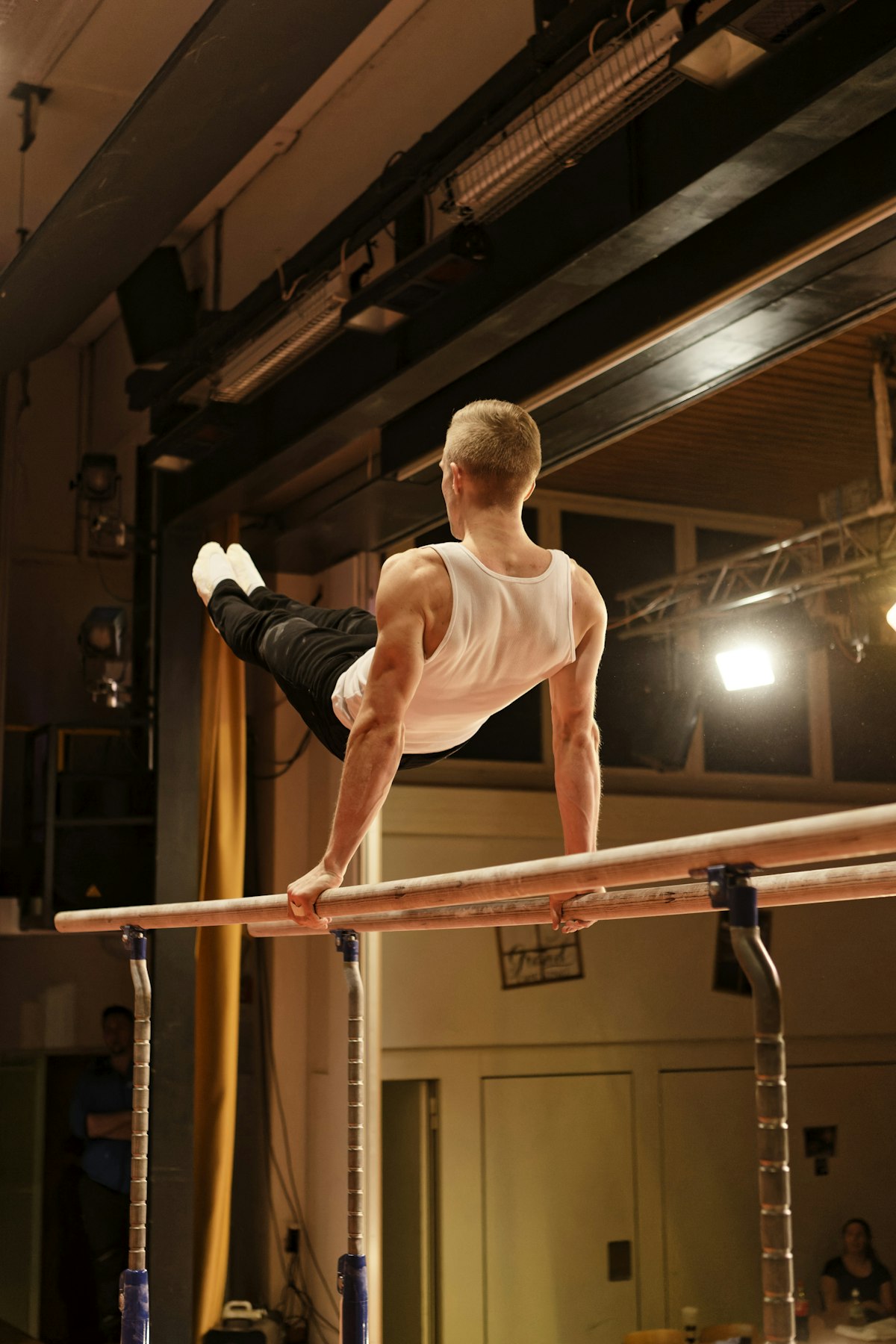
We should say up front that we run a climbing gym, so you can guess where our heart is. But a lot of the parents who walk in here have a kid who's been in gymnastics, or is deciding between gymnastics and climbing for the same Tuesday slot, and they want a real comparison instead of a sales pitch. Here it is. Gymnastics is a wonderful sport for kids, some of the best young climbers we've coached came out of it, and plenty of lakeshore families do both. What follows is how the two activities differ in practice, what the research says about keeping kids moving, and which kids tend to light up in which room.
Side by side: kids climbing and kids gymnastics
| Kids climbing (bouldering at Shift) | Kids gymnastics (typical program) | |
|---|---|---|
| A session looks like | Kid picks a climb, tries it, drops or climbs down, tries the next one; dozens of attempts an hour | Coach-led rotation through apparatus (floor, bars, beam, vault) with skills drilled in order |
| Structure | Drop in any open hour on a day pass, or join a coached program by age | Enrolled classes at a set weekly time, usually by age and level |
| How kids progress | Color circuits: finish the climbs in one color, move to the next | Skill levels: master a set of skills, test or move up to the next level |
| Who leads | The kid chooses; coaches teach in programs | The coach leads the whole session |
| Parent's role | On the floor with kids under 14 during open climbing; coaches supervise during programs | Usually watching from a lobby or viewing area |
| Gear | Climbing shoes and chalk, free with every pass and membership | Apparatus provided; attire requirements vary by program |
| Starting age | No minimum here with a parent on the floor; coached programs from age 7 | Many programs start with parent-and-tot classes; ask each program |
| Competitive path | Optional; USA Climbing youth competition exists, but most kids here never compete | Levels-based competition track is central to many programs |
| Waiting time | Almost none; walls are open, so kids climb as often as they want | Turns on apparatus are shared within the group |
None of those rows makes one sport better. They describe two different shapes of an hour, and kids have opinions about which shape they like.
Gymnastics strengths for kids
Credit where it's due, and there's a lot of it. Gymnastics builds body awareness that almost nothing else does at a young age: where your hips are in the air, how to fall and roll, how to hold a shape under load. It builds flexibility on purpose, which climbing mostly doesn't. It teaches kids to work through a defined progression under a coach's eye, which is a real life skill, and the levels system gives a kid a clear ladder and a clear next rung. For kids who love routine, thrive on being told exactly what to do next, and want a team and a meet calendar, gymnastics is a great home.
We also see the results on our walls. Kids who arrive from a few years of gymnastics tend to have strong cores, a good sense of their own center of gravity, and no fear of being upside down, and they pick up climbing movement fast. If your kid is in gymnastics and happy, we're not here to talk you out of it.
Climbing's strengths, and the kids they suit
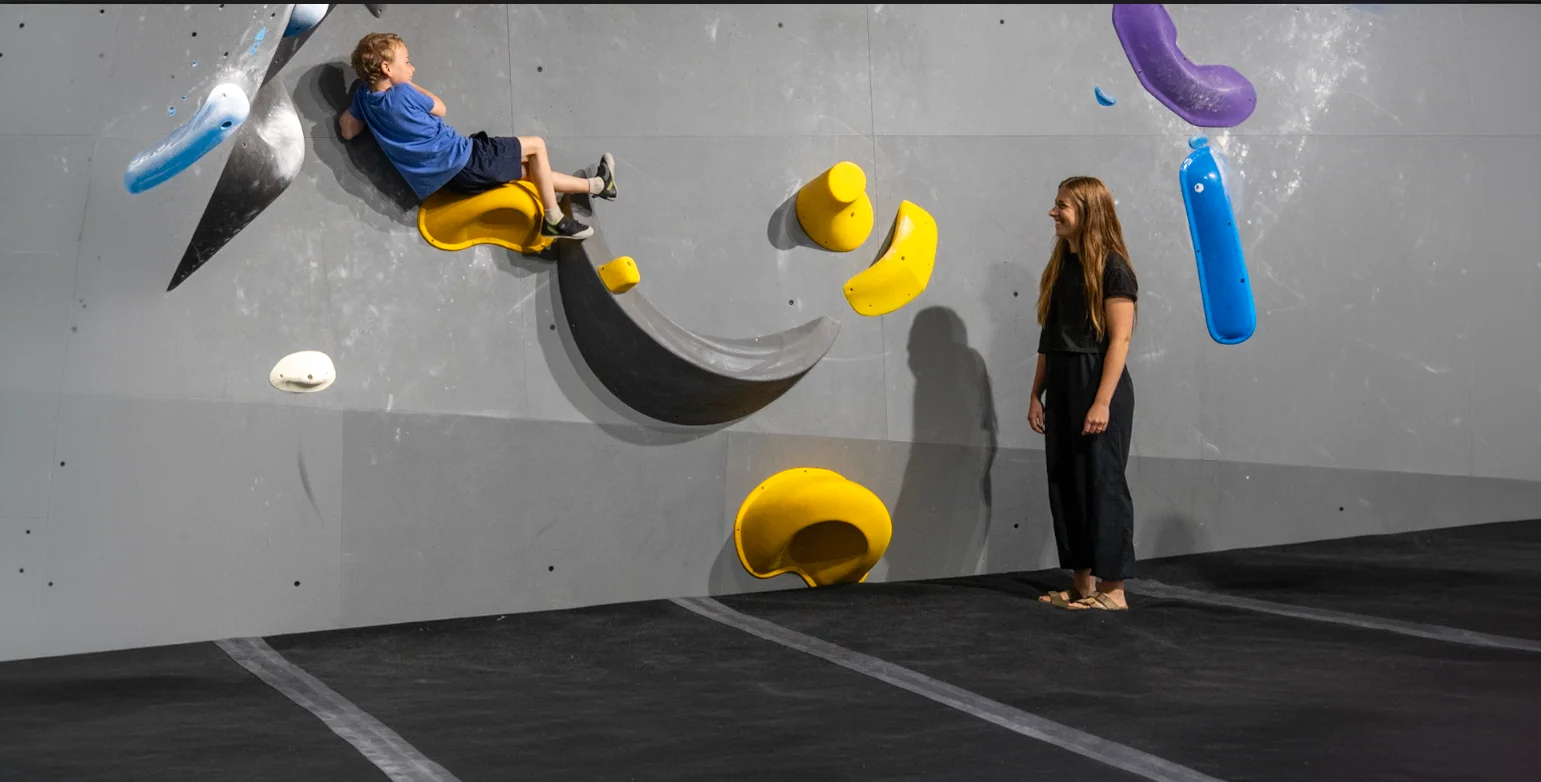
Climbing is a puzzle sport that happens to be a full-body workout. Every climb (a "boulder problem," in the sport's language) is a few moves long, and the kid has to figure out where the hands go, where the feet go, and how to move between them. Grip and pulling strength show up, but so do balance, footwork, and the kind of thinking that looks a lot like patience. Kids don't wait for a turn on a beam; they walk to the next climb. And because bouldering happens on 16-to-17-foot walls over thick padding with no ropes or harnesses, falling is a skill we teach on day one rather than something to be afraid of.
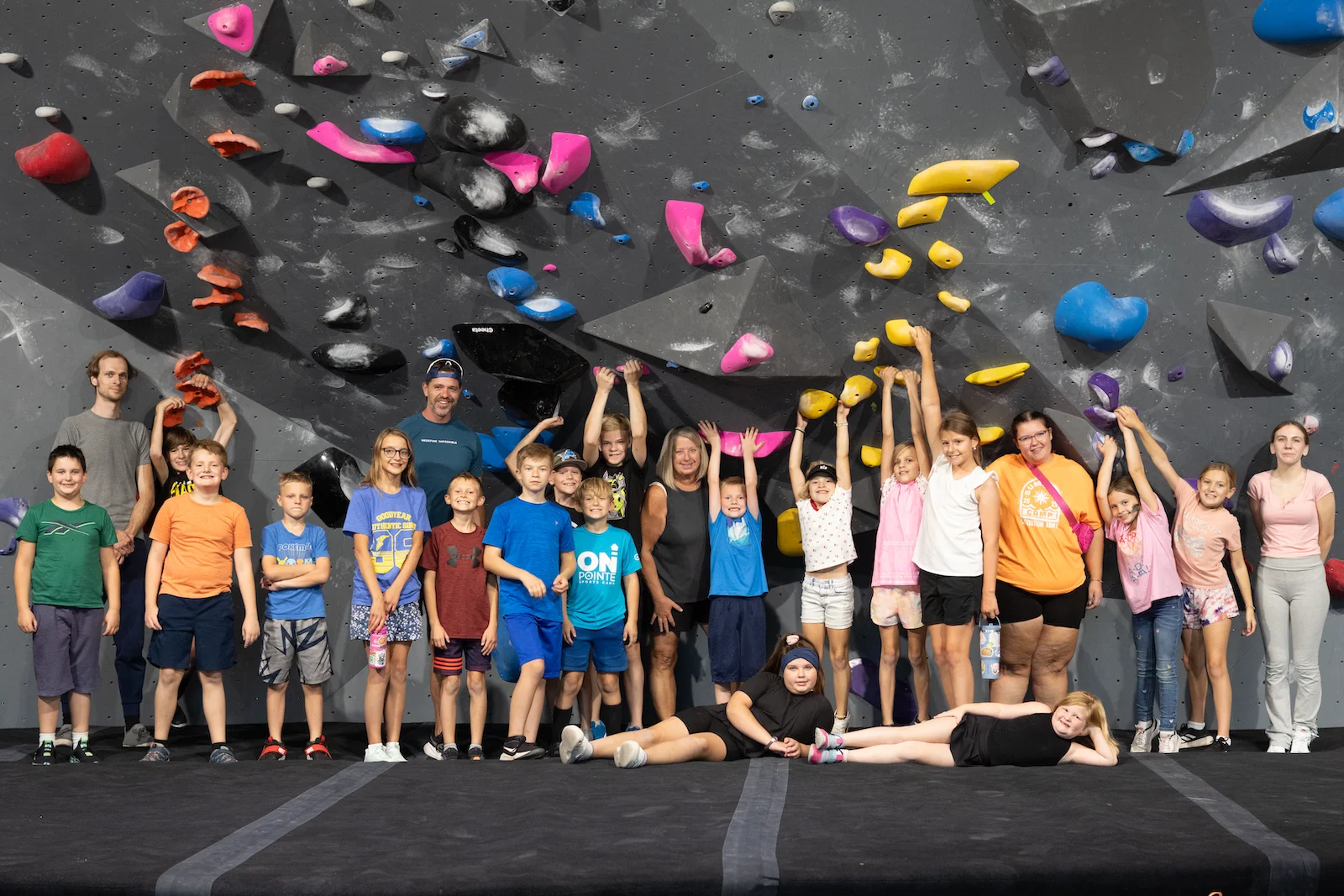
Two things about climbing are different enough from gymnastics that they decide the question for some families. The first is that the kid chooses. On a circuit, a seven-year-old picks which climb to try, decides when to bail, and decides when to go back for it, and that ownership is a big part of why kids ask to come back. The second is that the whole family can do it at once. A parent on the orange circuit, a nine-year-old on yellow two panels over, and a teenager on the steep wall are all doing the real sport on the same walls, which is rare in youth activities and is the reason our family membership exists.
Kids gymnastics in Holland and Zeeland vs. kids climbing: the weekly logistics
Holland and Zeeland families have good gymnastics options, and most run the way gymnastics does everywhere: you enroll in a session, you get a weekly class time by age and level, and popular slots fill early, so you plan a season ahead. That structure is a feature if your family runs on a calendar.
Climbing at Shift runs on a looser schedule, on purpose. The walls are open seven days a week (10 AM to 10 PM Monday and Friday, 6 AM to 10 PM Tuesday and Thursday, noon to 10 PM Wednesday, 8 AM to 8 PM Saturday, and 10 AM to 6 PM Sunday), a youth day pass is $19 with shoes and chalk included, and there's no reservation. For families who want coaching, the programs are organized by age: an afterschool program for ages 7 to 13 at $50 a month or $165 a semester, a weekday homeschool program in age tiers at $360 a semester including a full gym membership for the student, monthly homeschool meetups at $10 per child or $25 per family, a Friday middle and high school meetup at $5 drop-in for grades 6 through 12, and school-break and summer camps. Everything is on the youth programs hub.
The practical difference for a busy family is that climbing can be either a scheduled program or a spontaneous Saturday, and gymnastics is usually the first one only.
Cost of kids climbing vs. gymnastics
We'll only quote our own numbers, because gymnastics tuition varies a lot by program and level, and the honest way to compare is to ask a gymnastics program for its monthly rate plus any registration, uniform, and meet fees, then set that beside the numbers below.
- Trying it: a $19 youth day pass with gear included, no enrollment.
- Climbing often without a program: a $48 youth membership, or the $145 family membership that covers every household member with no limit on how many.
- Coached, once a week: the afterschool program at $50 a month or $165 a semester for ages 7 to 13.
- Homeschool: $360 a semester, and that includes the kid's full membership for the whole semester, so class day is one of several climbing days.
There's nothing to buy. Shoes and chalk are free with every pass and membership, and comfortable clothes are the whole uniform. We wrote up the full family pricing math if you want the break-even by visits.
Safety in kids climbing vs. gymnastics
Both sports have inherent risk, and the honest measure of any youth program is whether its safety systems are specific and visible rather than implied. We can only publish ours, and we'd encourage you to ask any gymnastics program the equivalent questions (coach certification, spotting practice, equipment inspection, how the floor is padded).
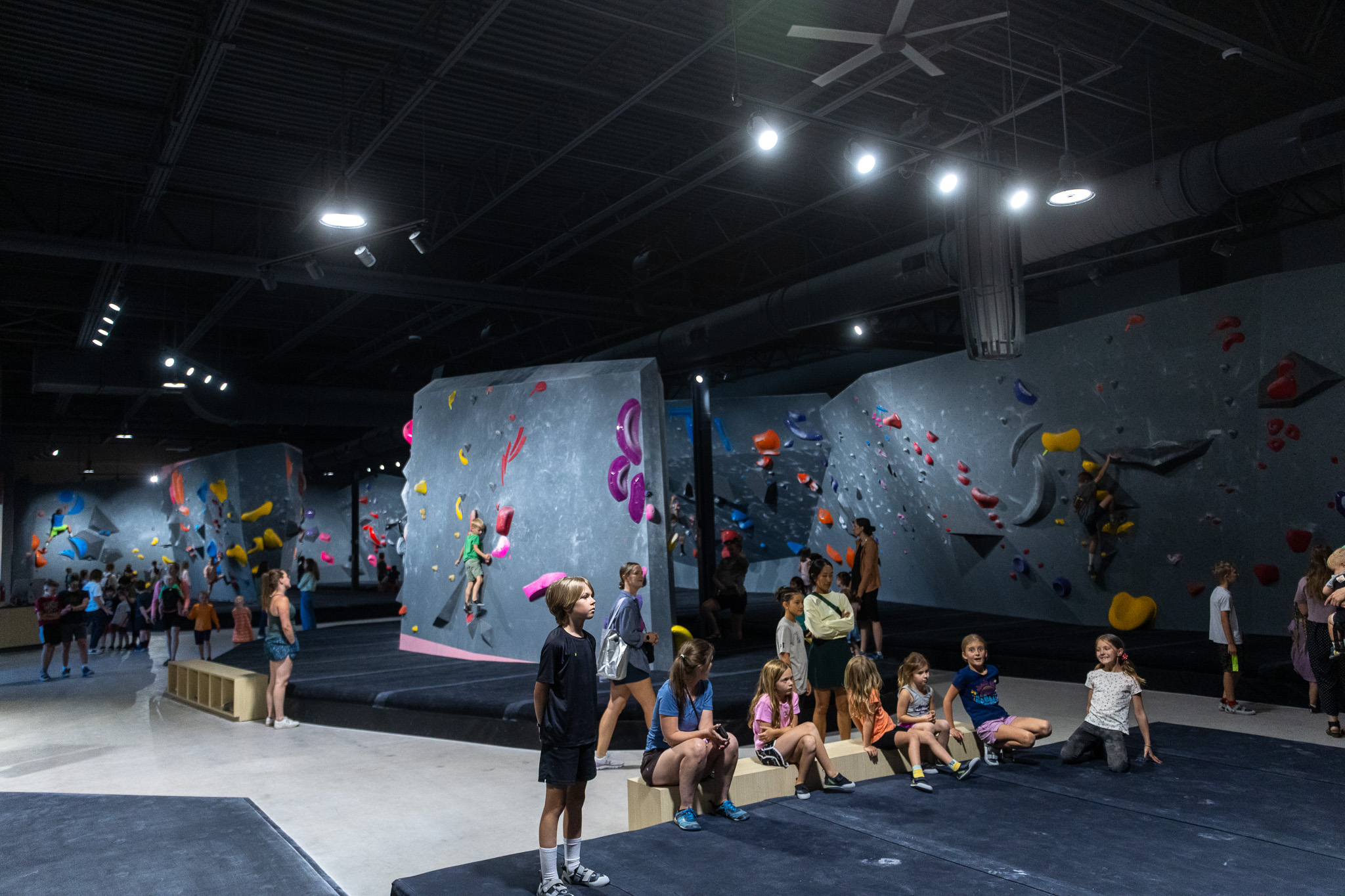
At Shift, the walls top out at 16 to 17 feet over 12 to 14 inches of continuous engineered padding, 4,348.6 square feet of it, with extended fall zones around every structure. The walls were engineered to EN 12572-2:2017, the international standard for bouldering walls, with the structural design independently reviewed by a US structural engineer. Falling is taught before climbing: kids learn to land on the pads and roll before they learn to top out. Climbers under 14 have a guardian or chaperone actively and directly with them on the floor for the whole visit during open climbing, and our coaches supervise during programs.
One piece of research shapes how we coach kids specifically. A 2025 scoping review of adolescent sport climbers identifies finger growth-plate stress injuries as the most common injury in that age group and ties them to intensive loading on small holds. Our youth programs keep kids off intensive small-hold training entirely; young hands belong on big holds and varied movement, and a kid who tells us a finger hurts gets pulled off the wall, not told to push through. We put that in writing so you can hold us to it.
Matching the sport to the kid
Here's the pattern we see on the floor, offered as observation rather than rule:
- A kid who loves routine, clear levels, and being coached through a defined progression tends to thrive in gymnastics, and the meet calendar gives that kid something to aim at.
- A kid who wants to choose, tinker, and solve things tends to thrive in climbing, where every climb is a puzzle the kid picks.
- A kid who hates waiting for a turn usually prefers climbing, because the walls are open and the next climb is three steps away.
- A flexible, tumbling-obsessed kid belongs in gymnastics, at least for a while; climbing doesn't build that.
- A family that wants to do the activity together ends up at the climbing gym, because parents and kids climb the same walls at the same time.
- A kid who's nervous about heights or being upside down can do either, but bouldering's short walls and climb-down-anytime option make the first day gentler than most parents expect.
And a good number of families answer "both." Gymnastics in the fall session and climbing on winter weekends is a common lakeshore rhythm, and the two sports feed each other: gymnastics teaches body control that shows up on the wall, and climbing teaches grip, problem-solving, and a comfort with falling that shows up everywhere.
Research on keeping kids moving and in a sport
The CDC's physical activity guidance for children asks for 60 or more minutes of daily activity, including muscle- and bone-strengthening movement, and names climbing as that kind of exercise. Gymnastics checks the same box; an hour in either building covers the day.
The more useful research is on why kids stay in a sport at all. The largest meta-analysis on persistent participation in youth sport found that enjoyment predicts continued participation more than anything else measured, with a feeling of competence mattering too. That's the question we'd ask about either activity: will my kid have fun, and will my kid feel capable? In a climbing gym the second half of that becomes very concrete. We keep 8 to 10 climbs in each of our four most accessible circuit colors at all times, which means 30 or more climbs a first-time kid can genuinely finish today, on the same walls as everyone else, with no grades on the wall to compare against. Countable wins on day one are how a first visit turns into a habit.
The 2025 international Delphi study on quality youth sport puts appropriate instruction and a safe, positive program climate at the core of good programs, which is a fair standard for a gymnastics program or a climbing gym, and one we'd invite you to check us against. We wrote a longer research-backed checklist for choosing a kids' climbing gym that works on any gym, including ours.
Trying climbing before you decide
The nice thing about this particular comparison is that one side of it is a $19 experiment. Sign the waiver online (a parent or legal guardian signs for anyone under 18), come in any open hour, get fitted for free shoes at the desk, and find the easiest colors. An hour is plenty for a first visit; families with younger kids often do 45 minutes on the wall and 30 in the café, which has a sightline to the mats and good coffee. If your kid asks when you're coming back, you have your answer, and if your kid would rather be on a balance beam, you have that answer too, and we'll cheer for either one.
Questions parents ask us about climbing and gymnastics
Is climbing or gymnastics better for a 6-year-old?
Neither is better; they're different shapes of an hour. Gymnastics gives a six-year-old coach-led structure, flexibility, and body awareness. Climbing gives a six-year-old puzzles to choose, no waiting, and a parent on the floor doing the same thing. At Shift a six-year-old climbs our most accessible circuit colors with a guardian actively on the mats, and a $19 youth day pass with gear included is the easiest way to find out which one your kid prefers.
Can a kid do both climbing and gymnastics?
Yes, and plenty of lakeshore families do. Gymnastics builds body control that shows up on the wall, and climbing builds grip, problem-solving, and comfort with falling. Because Shift is walk-in any open hour, climbing fits around an enrolled gymnastics schedule without a second fixed time slot.
Does climbing build the same strength as gymnastics?
They overlap on core and upper body and differ on the rest. Gymnastics builds flexibility and shape-holding under load that climbing mostly doesn't; climbing builds grip, pulling, balance, and footwork that gymnastics mostly doesn't. Both count as muscle- and bone-strengthening activity under the CDC's guidance for kids.
What age can kids start climbing at Shift?
There's no minimum age. Kids of any age climb our easiest circuit colors with a guardian or chaperone actively and directly with them on the floor; climbers under 14 always have an adult with them during open climbing, and 14 and up can climb solo. Coached programs start at age 7.
Do I have to stay during my kid's climbing session?
During open climbing, yes, if your kid is under 14: an adult is actively with them on the mats for the whole visit. During our coached programs (afterschool, homeschool, camps), our coaches supervise, and parents are welcome to climb, work from the co-working tables, or watch from the café.
