








If you are looking to get into indoor climbing in the Holland, Michigan area, your very first choice can feel a bit confusing: Should you choose a dedicated bouldering gym, or a facility that offers rope climbing?
When people picture "rope climbing," they usually expect massive, towering walls stretching 30 to 50+ feet into the air with dozens of climbing lanes. But in our local West Michigan landscape, the reality on the ground looks a bit different.
This guide uses a clear, structural comparison to break down the technical differences, equipment needs, and safety setups of Bouldering vs. Top Roping vs. Lead Climbing, helping you find the exact style and space that matches your goals.
Indoor Climbing Disciplines Defined
Before analyzing our local landscape, let’s establish exactly how these three core climbing styles work mechanically:
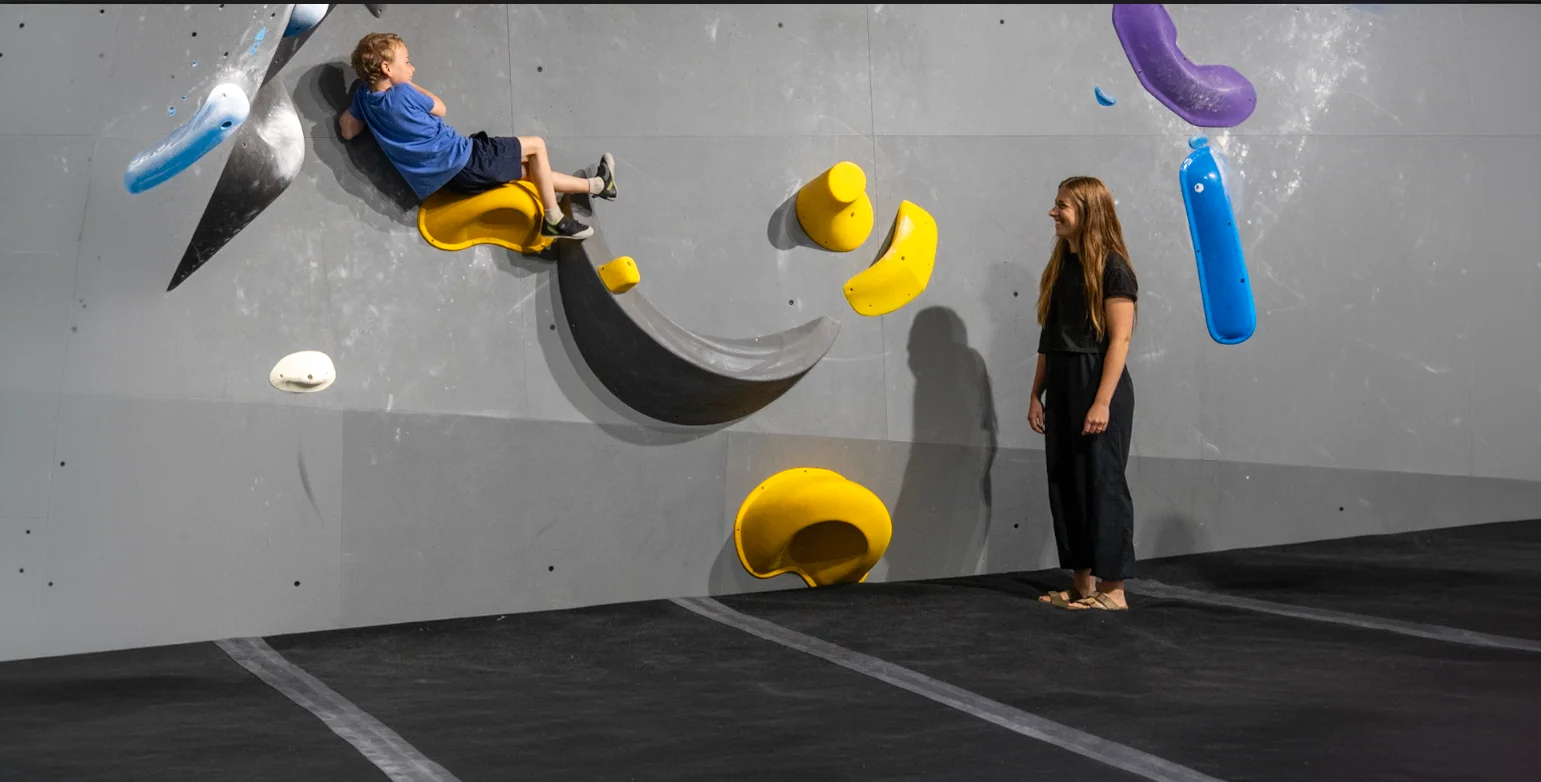
- Bouldering: Climbing shorter walls (typically 10 to 15 feet) completely free of ropes, harnesses, or hardware. Beneath you are a highly engineered floor padding system designed to cushion falls.
- Top Roping: Climbing taller walls while securely tied to a rope system that runs up to an anchor at the top of the wall and back down to a partner (the belayer) who manages your rope.
- Lead Climbing: Also known as sport climbing, an advanced discipline where the rope starts on the ground and you clip it into sequential anchors (draws) attached to the wall as you ascend. This requires precise movement and an experienced belayer.
Head-to-Head Feature Matrix
To see how these disciplines stack up across the structural vectors that matter most to a beginner, use this technical comparison grid:
The Structural Reality of Local Rope Options
When evaluating options in the local market, it helps to understand how different facilities are structured. Traditional climbing gyms usually construct massive vertical walls to host tall rope layouts. However, some mixed-discipline gyms function primarily as bouldering spaces (offering around 50 to 60 bouldering problems) and incorporate a small, limited selection of 10 to 12 top ropes.
While having rope options available can seem versatile at first glance, a low-height rope setup changes the technical nature of the climbing, and has a higher barrier to entry than bouldering. That is why we chose to only focus on bouldering at Shift.
The Technical Mismatch of Low-Height Ropes
- The Auto-Belay Problem: Auto-belays (mechanical devices that automatically catch and lower you when you fall) are highly convenient because they eliminate the need for a climbing partner. They are incredibly kid-friendly for birthday parties or family outings. However, at a low height on an auto-belay lane doesn't give an adult climber enough vertical runway to build genuine endurance for actual routes.
- The Endurance Disconnect: True rope climbing is meant to test sustained endurance, shake-out rest tactics, and rhythmic breathing over a long vertical distance. If a wall is under 30 feet, you don't quite get the space needed to practice true rope endurance techniques.
- The Lead Climbing Contradiction: Attempting to lead climb on any wall less than 30ft is very challenging. Lead climbing requires clipping into quickdraws every few feet, and low-height walls do not offer enough vertical clearance or rope length to safely manage a dynamic lead fall before a climber risks striking the ground padding.
Ultimately, if a facility offers a limited number of rope options at a lower height, it functions essentially as a bouldering gym with a small top rope addition rather than a full-scale rope climbing center.
The Engineering Behind Shift’s Bouldering Only Facility
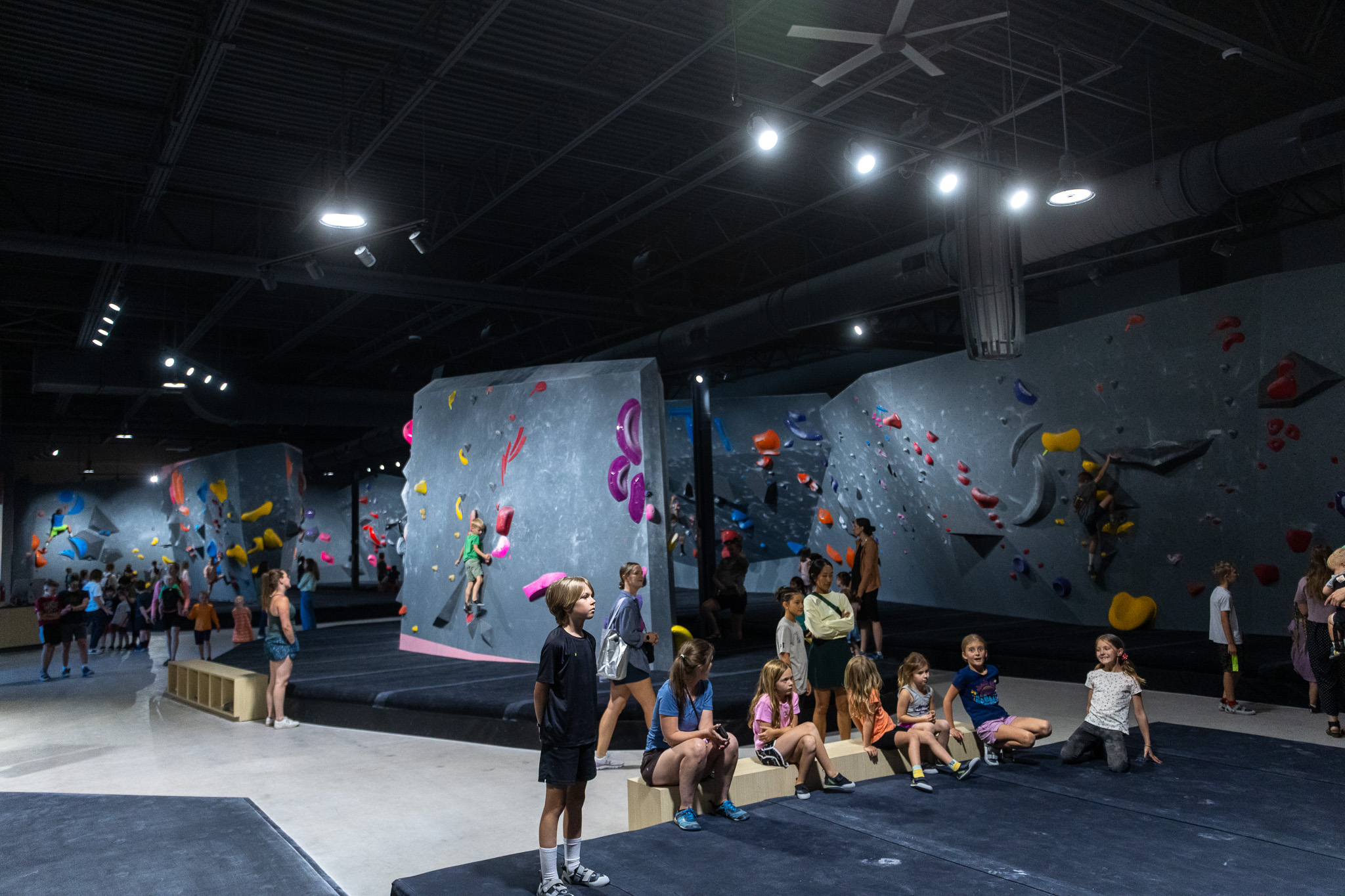
Since Shift is built with total intention, we didn't try to cram small, low-height rope setups into our space. Instead, we committed 100% of our layout to building West Michigan's premier bouldering destination.
For beginners looking at bouldering, the first question is usually about safety without ropes. To eliminate that anxiety, Shift’s entire 5,000 square foot facility is engineered around a premium, integrated bouldering system.
Wall Scale vs. Floor Engineering
1.The Optimal Wall Height:14 to 15 Feet.
Shift’s bouldering walls are intentionally designed to stand between 10 and 15 feet tall. This scale is the modern industry standard. It's high enough to allow for complex, creative movement, but low enough to keep your falls controlled and comfortable.
2.The Impact Absorption Layer:16 Inches of Custom Protection.
Our entire floor system is a continuous, custom-engineered padding matrix stretching 16 inches deep beneath every single wall. This is a multi-layered, variable-density foam system explicitly manufactured to decelerate falls smoothly and distribute impact forces away from your joints.
3.Eliminating Trip Hazards:The Seamless Mat System.
Unlike older gyms that use loose, individual safety mats pushed together (which create dangerous gaps and uneven seams), Shift's floor is a single, wall-to-wall unified surface. No matter where or how you drop, the mats behave identically.
The Beginner Cost Comparison
For someone stepping into a climbing gym for the first time, bouldering carries a significantly lower financial and logistical barrier to entry than traditional rope climbing.
To climb safely on ropes, you generally have to pay for a day pass, a shoe rental, a harness rental, a chalk bag rental, and often a mandatory belay safety class just to learn how to handle the hardware. Because bouldering strips away all that heavy gear, the pathway onto the mats is streamlined and highly cost-effective.
Shift’s Entry Pricing
At Shift, we keep our onboarding simple and entirely transparent:
- Day Pass: $24
The Quality Promise: Every single entry to Shift automatically includes chalk and a free shoe rental during your visit. It also includes full access to our dedicated strength and fitness training zone, and access to our open co-working spaces. You get a complete, high-quality athletic experience without hidden gear-rental upcharges.
Which Style is Right for You?
Choose a Low-Height Rope Option If:
- Your primary goal is finding an auto-belay environment to occupy kids or host a youth birthday party.
- You specifically want to practice the mechanical process of tying knots and handling a belay device in a low-stakes setting.
Choose Shift’s Dedicated Bouldering Environment If:
- You value efficiency: You can walk through our doors solo or with friends, put on your shoes, and start climbing instantly without managing dynamic ropes.
- You want to build pure strength and coordination: Bouldering forces you to learn spatial awareness, core stability, and dynamic power faster than low-height rope climbing can.
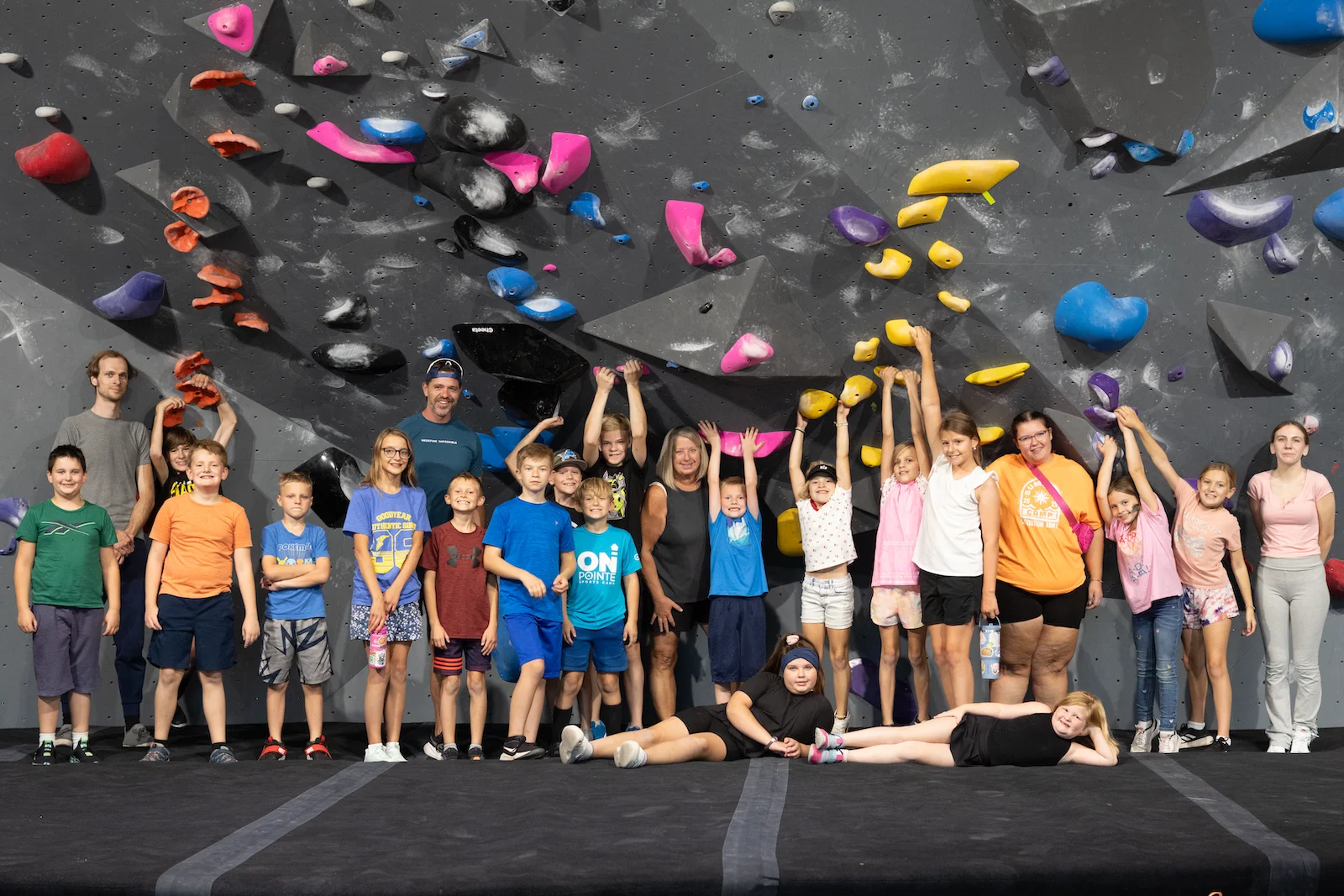
- You want a community culture: Since bouldering involves resting on the mats between short, high-intensity burns, it is naturally highly social. You are sharing ideas, cheering on friends, and hanging out in an intentional, human-centric space.
